Toilet Repair & Installation
Handle a toilet that runs on, leaks at the base or clogs, or set a new one.
A toilet that will not flush almost always has a problem in the tank or in the bowl, and the symptom shows which. A few minutes of checking can save a service call, and it tells you when to call.
By the Avondale Plumbing Co. team ·
Take off the tank lid and find the chain linking the handle arm to the flapper. If the chain is loose, broken or off its hook, the flapper never lifts. Reattach it with a little slack, about half an inch.
If the handle feels floppy, the arm inside the tank may have snapped. Handles and arms are inexpensive parts, and a plumber can replace them in minutes.
A flush needs a full tank. If the water level sits well below the fill line, the fill valve may be stuck, the supply valve may be partly closed or the float may be set too low.
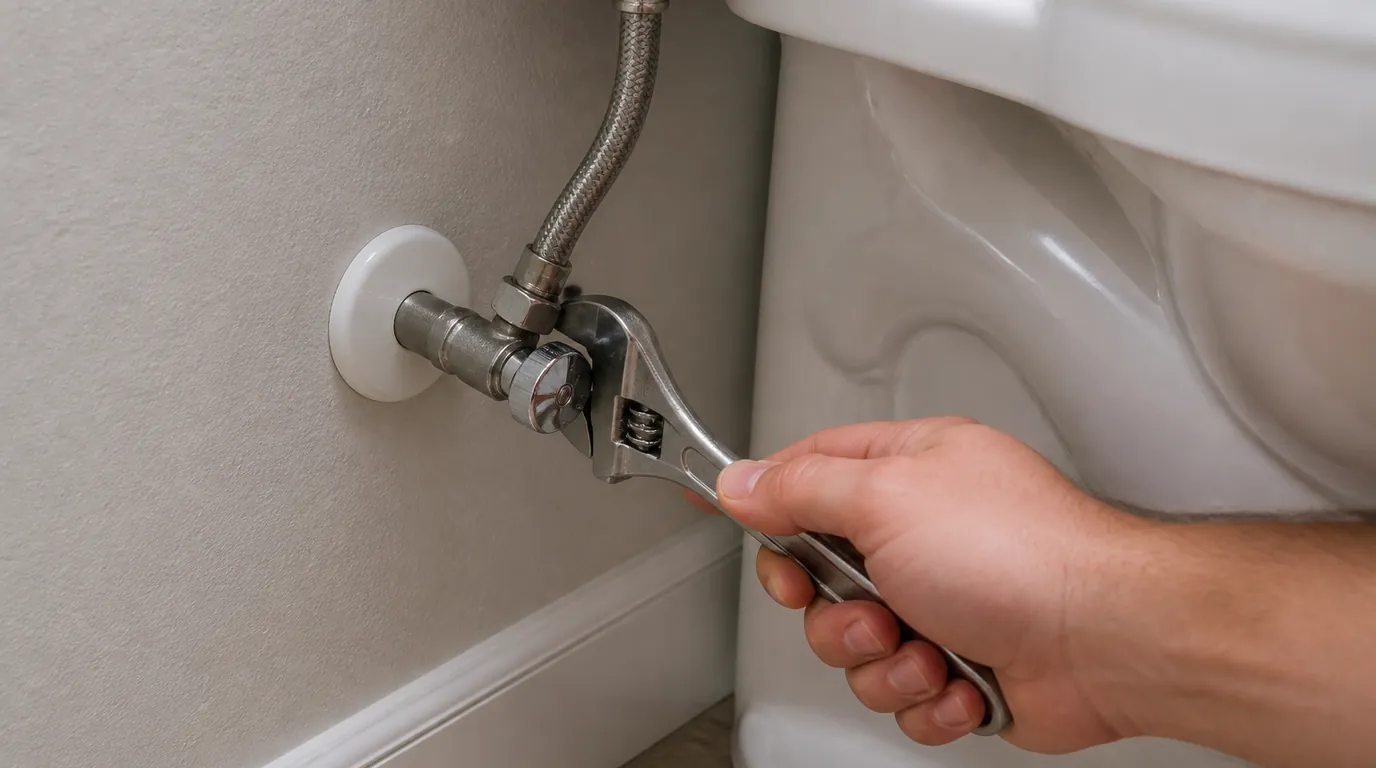
Check the valve on the wall behind the toilet and open it fully. Then watch the tank refill after a flush. A slow or noisy refill points to a worn fill valve.
A bowl that fills nearly to the rim and drains slowly is partly clogged. A plunger with a good seal usually clears it. Use steady pushes, not wild ones, and keep the cup under water.
If plunging fails, a closet auger reaches deeper. Avoid caustic drain products in a toilet, since they can harm the porcelain seal and old pipe.
Under the rim, small jets send water into the bowl. In hard water areas, mineral scale blocks them, and the flush loses power. A mirror and a flashlight show the holes.
Clearing them with a small brush and vinegar often restores the swirl. If scale returns quickly, a softener addresses the cause.
Match what you see to the likely fix.
| Symptom | Likely cause | Try this |
|---|---|---|
| Handle moves, no flush | A loose or broken chain | Reattach with slight slack |
| Weak flush, low tank | A stuck fill valve or closed supply | Open the valve and watch the refill |
| Bowl rises and drains slowly | A partial clog | Plunge, then auger |
| Weak swirl | Scale in the rim jets | Clean the jets with vinegar |
| Other drains slow too | A main line blockage | Stop using water and call |
If the sink and tub drain slowly or gurgle when you flush, the problem is not the toilet. The main drain may be partly blocked, and wastewater has nowhere to go.
This is the moment to stop using water and call. Read sewer backup repair if water rises in a tub or a floor drain.
Wipes, even the ones labeled flushable, do not break down like paper. Paper towels, cotton swabs, dental floss and feminine products collect in the line and build a clog.
Grease poured into the sink also ends up in the same pipe. A short list of rules for the household prevents most clogs.
A toilet that clogs every few days has an underlying cause. It could be a low-flow model with a weak flush, a partial blockage in the trap or a problem in the line past the toilet.
A camera look can separate a fixture problem from a line problem. See drain cleaning for how a plumber clears a line.
Work from the simplest cause to the hardest. First check the handle and chain, then the water level in the tank, then the bowl with a plunger, then the rim jets, and last the other drains in the house. Each step takes only a few minutes.
Keep notes on what you tried. If you call a plumber, a short list of checks and results speeds up the diagnosis and avoids repeating steps.
Older toilets used far more water per flush than current models. A newer low-flow toilet relies on good design and a clean bowl to clear waste. Scale in the jets or a partly closed supply valve hurts it more than it hurts an old toilet.
If a newer toilet has always flushed poorly, it may just be a weak model. A plumber can suggest one with a stronger, well-reviewed flush.
A flange plunger fits the drain opening and pushes water through the trap. Push down gently first to expel air, then pull up and repeat. Ten to fifteen strokes clear most clogs.
If the water level does not drop after several tries, stop and use an auger. Repeated plunging on a deep clog only moves water around and can splash wastewater on the floor.
Use only toilet paper, and keep wipes, floss and cotton products out of the bowl. Clean the rim jets every few months with a brush and vinegar, and replace tank parts every few years in hard water.
A toilet that is cared for in small ways rarely needs a rescue. If a problem repeats, a plumber can check the trap and the line behind it.
A cracked bowl, a toilet that rocks and leaks or an old model that never flushes well is a candidate for replacement. A new one saves water and often flushes better.
Read toilet repair and installation for what a visit covers.
A detached chain or a snapped arm inside the tank is the likely reason.
Yes. Use a flange plunger with a good seal.
Air is moving through a partly blocked line. Check other fixtures.
Better not. They can harm the seal and old pipe.
If several fixtures are affected, the main line is the likely cause.
Handle a toilet that runs on, leaks at the base or clogs, or set a new one.
Clear slow or blocked drains in a kitchen, bathroom, laundry room or main line and find out what caused the clog.
Handle wastewater rising in a tub or floor drain by clearing the main line and checking its condition.
Hissing or random refilling means water is draining away all day. Most cases trace back to the flapper or the fill valve.
A sewage smell can mean a dry trap, a loose toilet seal or a cracked line. Check the simple causes first, then call if it stays.
White crust on faucets and short-lived heaters are signs of hard water. Learn what scale does and how to deal with it.
Call and describe what you have tried. Someone will connect you with a plumber right away.
Service area centered on Avondale and nearby Maricopa County cities.