High Water Bill Leak Detection
Find out why a bill jumped or the meter will not stop, and whether a leak is the cause.
Somewhere in the house or yard, water is escaping, and nothing shows where. Leak detection traces the loss to a specific pipe, marks it and keeps the opening small. If water is spreading right now, do not wait for a daytime appointment. Call the 24/7 line.
Describe what you have noticed and ask about openings today. Timing depends on the contractor's schedule.
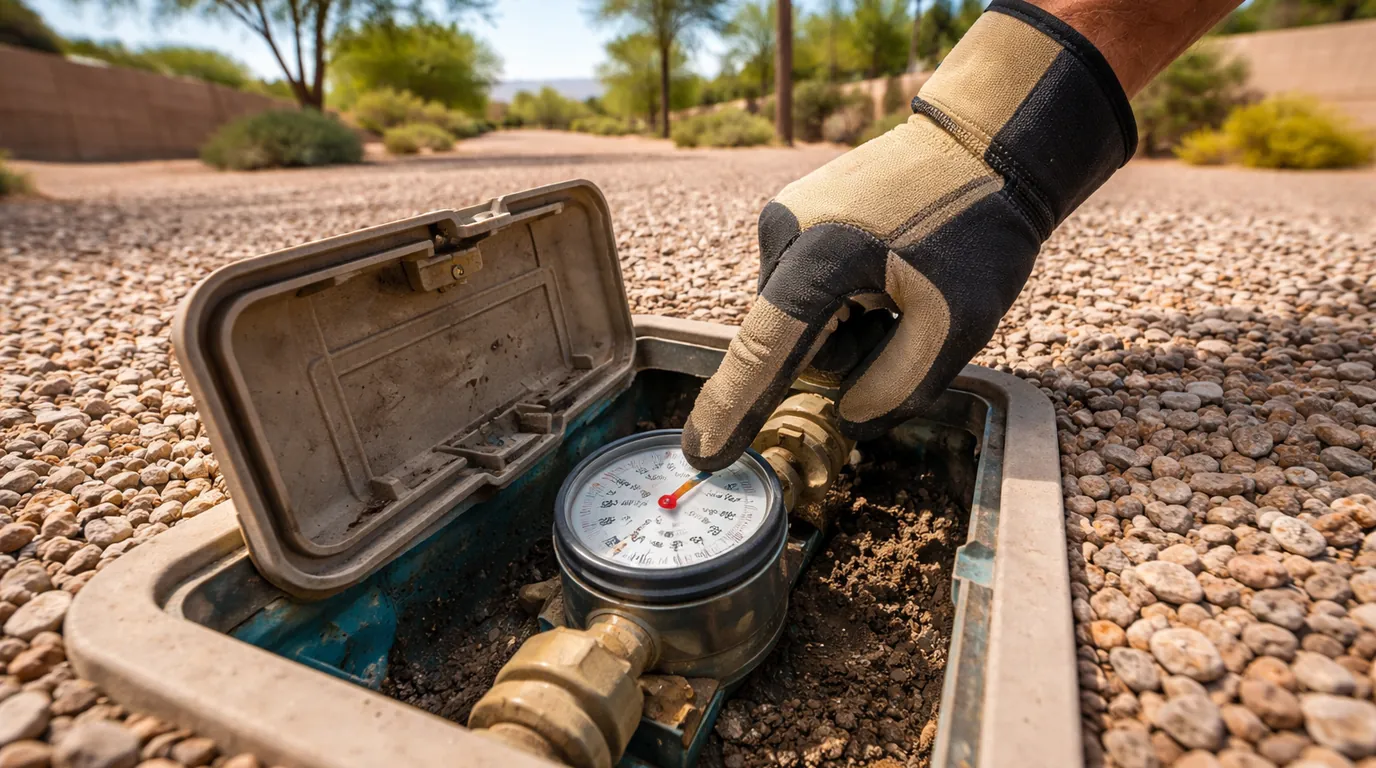
Close every tap, turn off the ice maker and pause the sprinkler timer. Lift the lid on the meter box and watch the leak indicator. Movement while the house sits idle means water is going somewhere.
Start with the toilets, since a worn flapper can leak without making a sound. Add a little dye to each tank and check the bowl about fifteen minutes later. Color that shows up means the flapper is passing water.
Then close the house shutoff valve and watch the meter again. A meter that stops puts the leak inside the house. A meter that keeps going puts it on the underground line between the meter and the house.
Good detection works in stages. The plumber closes valves to split the system into sections, applies pressure to each and sees which section loses it.
From there, listening gear picks up the sound of water escaping from a pipe, a thermal camera shows cool or warm areas, and a tracer gas can help with a stubborn line. Ask which of these will be used on your job.
The result should be a mark on the floor or wall. That lets a repair crew open one small area instead of several.
Slab foundations are common across the Valley, which means some of the supply piping runs under the floor and not through an attic. A slow leak there can go unnoticed for months.
Monsoon storms can confuse the picture. A soggy yard after heavy rain is not always a sprinkler or supply leak, so run the meter check before anyone digs.
Detection is usually billed by the time and methods needed to locate the leak, with the repair quoted on its own. These points move the number.
Ask whether the detection charge is credited when the same contractor does the repair. Policies differ, so get the answer in the quote.
Inside the house, suspect supply lines in walls, fittings behind a tub, washer valves and the line to a refrigerator. Outdoors, the underground supply and the connection to the irrigation system account for most leaks.
A zone that stays wet after it shuts off, a head that geysers or a valve that never fully closes can mimic a house leak on the meter. Run each zone briefly and watch for pooling before blaming the pipes.
Drain leaks behave differently from supply leaks. A drain only drips while water is running down it, so a stain that grows after a shower often points to a drain.
If drywall or flooring already got wet, the structure needs drying after the pipe is fixed. The water damage restoration page covers that step.
The plumber should tell you where the leak sits, why it failed and what the repair takes. A worn shutoff valve is usually a short fix, while a line under a slab involves a bigger decision and more than one approach.
Ask whether the quote covers only the pipe or also the opening. Patching drywall, tile or concrete is often a separate trade, so find out who handles it and who pays.
One of these justifies the meter check. Two or more justify a call.
Close the main shutoff and note whether the meter stops. That single detail tells the contractor where to begin.
Move rugs, boxes and furniture away from the damp spot. Keep children and pets off wet floors, and keep the meter box and yard line free of obstacles.
Write down when you first saw the problem and which rooms are affected. Photograph the stains and the meter face. Have a recent water bill on hand.
Some callers say a plumber looked around and left without an answer. That usually means the leak is small, shows only under pressure or sits deep under concrete.
A second attempt works best when it is methodical. The contractor closes off sections, tests each for pressure loss and uses more than one method. Mention what was already tried so the visit does not repeat it.
If the trail ends at the foundation, read about slab leak detection. If it ends in the yard, see water line repair.
Duplexes, townhomes and small apartment buildings can have a leak in a shared line. Say what kind of property it is and who owns it, since approval for repairs can hold up the work.
A parking area with pooling water at a plaza or an apartment lot is a bigger search. For those jobs, see commercial plumbing.
If you are selling the house, a leak can surface during an inspection. Ask the contractor for a written note describing what was found and fixed.
Find out why a bill jumped or the meter will not stop, and whether a leak is the cause.
Pin down a supply pipe that is leaking beneath the foundation slab and repair it.
Repair or replace the underground line that feeds water into the house.
The clearest sign is a meter that moves with everything off. A rising bill, a musty smell, a warm floor patch or the sound of water in a silent house point the same way.
Frequently, yes. The plumber isolates sections, listens along the pipe and scans with a thermal camera, then opens only the marked spot. A leak that appears only under pressure takes extra effort.
Certain policies pay to locate a sudden leak, but many exclude worn pipe. Review the policy and ring your insurer before work starts.
Yes, someone answers the line at all hours. Shut the main valve if you can get to it, then explain where water shows and what the meter is doing.
The price depends on access, pipe material and how many methods the search needs. Get a clear quote first and ask whether the fee carries over to the repair.
The goal is a marked spot so the repair opens one small area. Accuracy depends on pipe depth, material and floor covering, so ask what to expect in your case.
Many do. Ask whether the repair is included, what patching the opening costs and whether the detection fee counts toward it.
The contractor marks the spot first. Opening concrete means a saw cut, a repair and a patch, each priced separately. Call 811 before digging anywhere in the yard.
Ask the dispatcher about same-day openings. Availability varies with the hour and the contractor, and an active leak is handled first.
If you can reach the main valve, close it and phone. Describe what you see and the dispatcher will explain what comes next.
Service area centered on Avondale and nearby Maricopa County cities.