Leak Detection
Pinpoint where hidden water is escaping, whether in a wall, under a floor or along the buried pipe, before any demolition starts.
Water surfacing in the yard, a soggy strip of ground near the meter box or pressure that vanished all at once. The service line between the meter and the house is probably leaking. If water is pooling now or the house has no water, call the 24/7 line.
Close the main at the house, note whether the meter still turns, and call. That detail saves time.
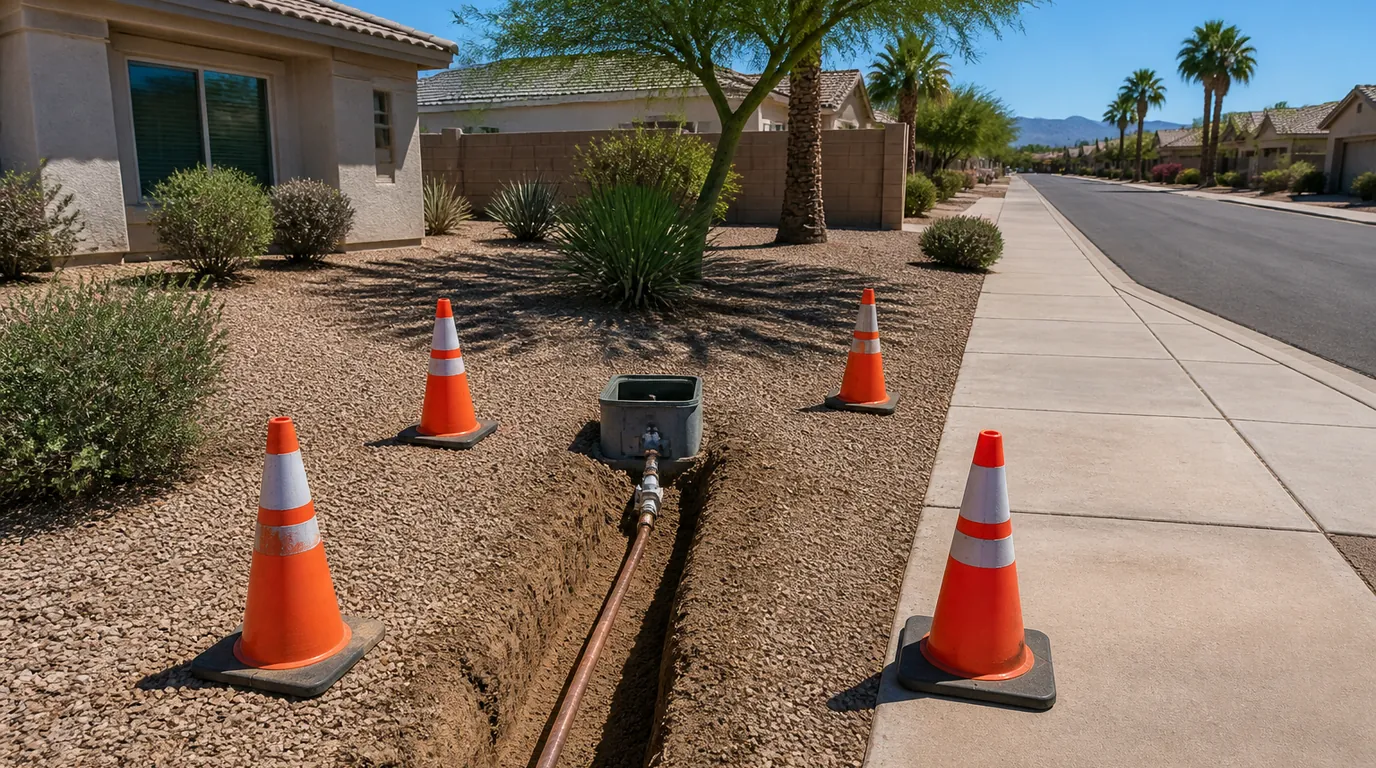
The service line is the underground pipe that brings water from the city meter into the house. It runs under the yard, often beneath landscaping or a driveway, and is usually copper, polyethylene or older galvanized steel.
Ownership matters. The city maintains its water mains and the meter, and the homeowner is generally responsible for the pipe on the house side. For City of Avondale accounts, Public Works at (623) 333-4400 can tell you where the line changes hands.
A plumber confirms the line is the problem with a meter test: close the house main and see whether the dial still moves. Then the contractor traces the pipe route and listens along it to narrow down the spot.
On long lines the leak may sit far from where water shows up, because water follows the easiest path through soil. A marked location keeps the trench short.
A short repair works when the pipe is otherwise sound. A line with several failures, pinholes or heavy corrosion is a candidate for replacement, either by open trench or by a method that avoids digging up the whole yard.
Ask for both options, with what each does to landscaping, walkways and the driveway. Replacement is a bigger job, but it ends the cycle of repeat leaks.
Arizona 811 is free, and utility locators have two full working days to mark buried lines. The paint or flags stay valid for 15 working days. Call before a plumber, a landscaper or you start excavating.
Permits and inspections may apply to a replacement. Ask the contractor who pulls them and how long they add.
Underground work depends on length, depth and what sits on top of the pipe.
Ask whether restoring landscaping and concrete is included, and get the answer in the quote.
One sign may be minor, but a few together point to a buried leak.
Shut the main valve at the house, photograph the meter face and watch whether the dial moves.
Keep kids, pets and cars away from soft or sunken ground. Mark the wet area so the contractor can find it. Do not dig on your own before 811 marks the lines.
Callers often describe a valve stuck open, a broken sprinkler line or a pipe that fails when the irrigation turns on. That matters here because many yards tie irrigation into the same service line.
Test it by running each zone and checking the meter and the soil. A leak that appears only when a zone runs points to that branch. Ask whether the contractor repairs irrigation tie-ins and valves, and say so on the call.
If the meter moves with the irrigation off, see leak detection to separate the yard line from the house.
The contractor starts at the meter, then walks the route and listens along the pipe. A line that looks fine on top may leak beneath a walkway or slab.
Where the pipe is plastic, standard listening is harder, so ask about the contractor's methods for non-metal lines. A marked spot means a single small trench.
In October 2024 the City of Avondale finished a service line inventory of more than 26,000 connections. It identified lead and galvanized lines that need replacement, according to its 2024 water quality report.
If your house is older, ask Public Works what the inventory shows for your address before paying for a repair. A line made of galvanized steel or lead is a strong reason to replace and not to patch.
Pinpoint where hidden water is escaping, whether in a wall, under a floor or along the buried pipe, before any demolition starts.
Find out why a bill jumped or the meter will not stop, and whether a leak is the cause.
Shut down a split pipe quickly, then repair or replace the damaged section.
Shut the main valve at the house and watch the meter. A dial that still moves puts the leak on the buried pipe, and a dial that stops puts it indoors.
The owner generally handles the pipe on the house side, while the city handles its main and the meter. Ask Public Works if you are unsure where the line changes hands.
A short line can be finished in a day, while a long or deep run takes more time. Ask how long the job should last and how long the water stays off.
Yes. The call is free, and locators mark buried utilities within two full working days. Do it before any digging, even for a repair.
The price depends on length, depth, pipe material and the surface above. Get a written quote with and without surface restoration so you can compare.
Ask the dispatcher about same-day openings. A broken line that floods a yard or leaves the house without water gets priority.
Ask City of Avondale Public Works what its inventory shows for your address, and ask a plumber to confirm the pipe material at the meter and the entry point. Replacement may be worth planning.
Say so when you call. Many contractors repair irrigation tie-ins and valves that connect to the water line, but it depends on the contractor.
Shut the house main, check the meter, then call. The dispatcher will ask where the water shows up and how the pressure is.
Service area centered on Avondale and nearby Maricopa County cities.