Burst Pipe Repair
Shut down a split pipe quickly, then repair or replace the damaged section.
Water soaks floors and drywall quickly, and mold can start within a couple of days. Call the dedicated restoration line, describe what happened and the dispatcher connects you with a team that handles water removal and drying.
Stop the source first. Shut off the main water valve, then call this line.
Close the main water valve when a pipe is the source. Cut power to wet areas only from a dry position, or leave it to the utility.
Lift valuables and furniture clear of the water and take photos of the damage for your insurer.
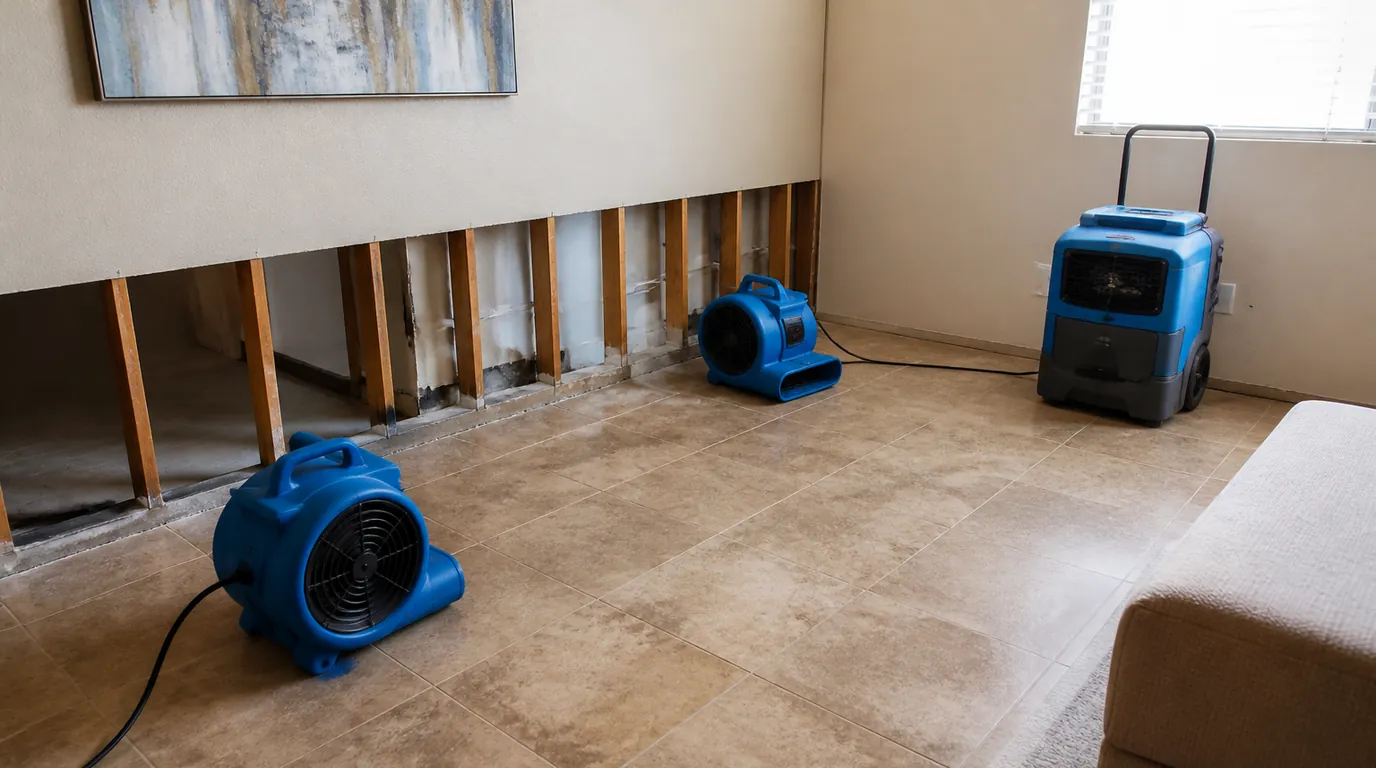
Crews remove standing water, pull up wet carpet pad and set air movers and dehumidifiers. They open wall cavities when needed so trapped moisture can escape.
Moisture meters and thermal cameras show where water has traveled, including places you cannot see.
Restoration scope depends on how much water and how long it sat.
Ask your insurer what documentation they need and whether the contractor works with their process.
Water from a supply line is cleaner than water from a washing machine or a sewer backup. Sewage needs more careful handling and removal of porous materials.
Tell the dispatcher what the source was. It changes the plan.
Mold can begin to grow on wet materials within a couple of days, so quick drying matters. If you see or smell mold, tell the crew.
Call your insurer early. Photos, receipts and the dry-out log help with a claim.
Dry desert air can mask a slow leak until a stain, warped floor or musty smell appears. Slab and ceiling leaks are common causes in Valley homes.
If the source is still unknown, a plumber can find it with leak detection while the drying work proceeds.
Not all damage is a puddle on the floor.
Stop the source, move belongings and open windows for air. Keep people and pets away from affected areas.
Take photos and video of all damage and list affected items. Keep receipts.
The crew measures moisture in floors and walls, identifies the water source type and maps the affected area.
They then explain the drying plan and what will be removed.
Many materials can be dried in place. Saturated drywall, pad and insulation are often removed. Rebuilding follows once everything is dry.
If the source is a plumbing failure, see burst pipe repair and leak detection.
Close the main water valve, make the call and then photograph the damage.
It often takes several days, depending on the materials and the amount of water.
Small spills may dry that way. Water in walls or under floors needs equipment and moisture checks.
Some policies cover sudden events but not long term leaks. Ask your insurer.
Cost depends on the area, the water type and the materials. Ask about the process and what an estimate covers.
Call the 24/7 restoration line. The dispatcher can tell you what arrival time is possible.
Restoration dries the structure. A plumber repairs the pipe. Ask the dispatcher about both.
Tell the dispatcher the source so the right team and precautions are lined up.
Shut down a split pipe quickly, then repair or replace the damaged section.
Trace the source of a ceiling stain, bubbling paint or a soft wall, then fix the pipe behind it.
Pinpoint where hidden water is escaping, whether in a wall, under a floor or along the buried pipe, before any demolition starts.
Shut off the main valve and call the restoration line. The dispatcher connects you with a team.
Service area centered on Avondale and nearby Maricopa County cities.