Leak Detection
Pinpoint where hidden water is escaping, whether in a wall, under a floor or along the buried pipe, before any demolition starts.
A brown ring on the ceiling, a bubble in the drywall, a wall that feels damp or water dripping from a light fixture. Each one means water is traveling somewhere it should not. A plumber traces it back to the pipe and repairs it. If the ceiling is sagging, treat it as an emergency.
Do not poke a sagging ceiling. Close the main valve, move belongings aside and call.
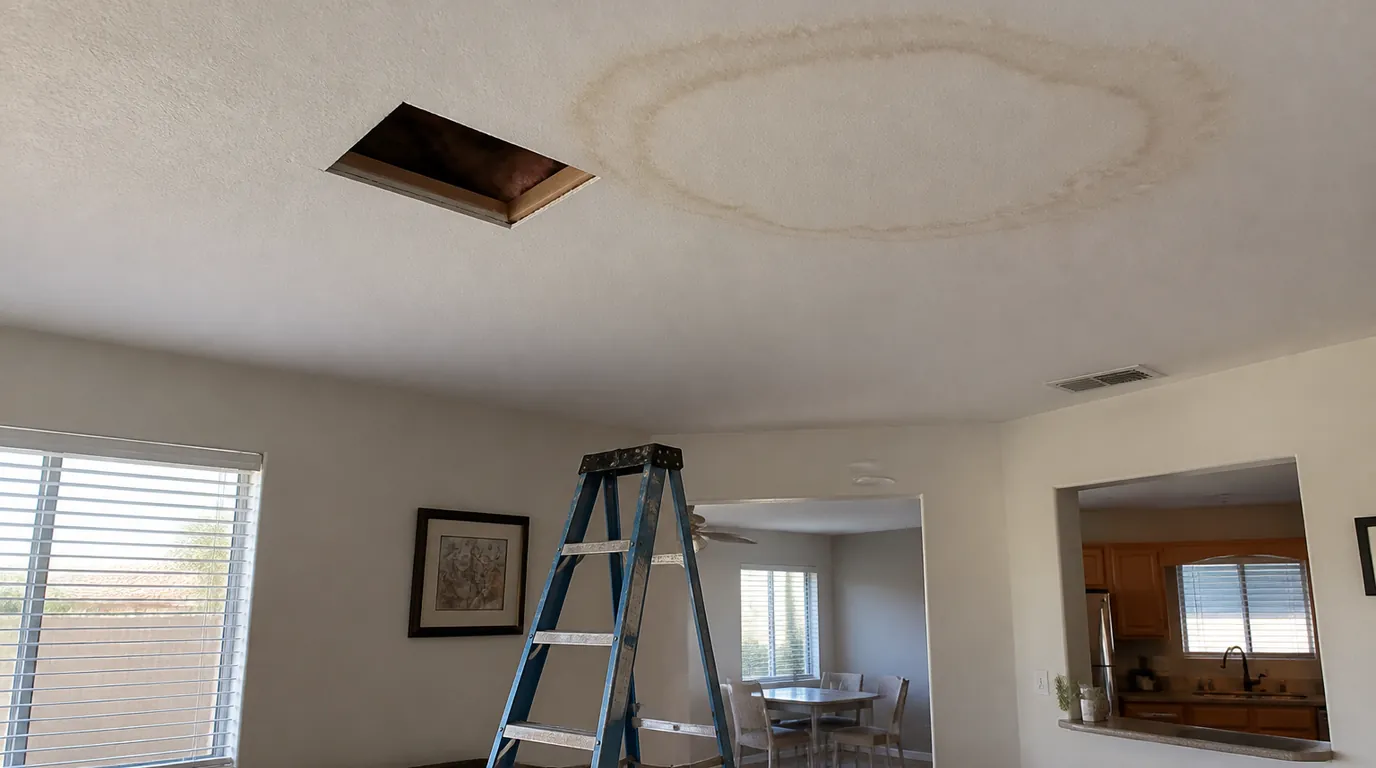
A ceiling stain on the first floor often sits under a bathroom, a laundry room or a kitchen on the second floor. In a single-story house the source may be an attic supply line, a water heater in the attic or a leaking air handler drain.
Walls hide supply lines to tubs, showers and sinks. A slow drip at a valve or a tub spout can soak insulation and drywall for weeks before a stain shows.
Not every ceiling stain is plumbing. A roof leak shows up after storms and often follows rain. An air conditioning drain pan or line that overflows can stain a ceiling in summer when the system runs hardest.
A plumbing leak keeps going when it is dry outside and the cooling is off. Turn off the main valve and watch the stain. If it stops growing, a supply pipe is the likely source.
The price tracks how hard the source is to reach and how much finish work follows.
Ask who patches and paints the opening, and whether that is in the quote.
The plumber checks the room above and the wall line, runs a pressure test on supply lines and may use a moisture meter to map the damp area. A thermal scan can reveal wet insulation.
The contractor then cuts a small access hole at the source. A clean, small opening costs less to patch than a large hole made by guessing.
Wet drywall and insulation should be dried or removed so mold does not take hold. Painting over a stain does not solve a wet cavity.
Water damage that spread to floors and walls is covered under water damage restoration. A leak that you cannot trace starts with leak detection.
Many local homes keep the water heater or supply lines in an attic or garage, and summer heat in an attic can stress fittings and flexible connectors.
Two-story homes in newer subdivisions add a second path: water from an upstairs bath can travel along framing and drip far from the true source.
Any one of these deserves a closer look before it spreads.
Close the main valve to stop the source. Put a bucket under any active drip and move furniture out of the way.
When water is close to a light or an outlet, avoid the switch and turn power off at the panel only if you can get there on dry ground. Stay out from under any sagging ceiling.
The contractor traces the stain upward and outward, reading the room above, the wall and the attic. Pressure tests on each supply branch show which line is losing water.
Where the leak is a drain line, the test is different. The plumber runs water into the fixture above and watches for a drip below. Moisture mapping and thermal scanning help avoid blind cuts.
A pinhole in copper or a failed fitting is often a spot repair. A section of pipe with repeated pinholes may be worth replacing for good.
If the house has older galvanized or copper lines, ask about repiping and compare it to repeated patches over several years.
Close the main water valve. If the stain stops spreading, a supply pipe is likely the source. Put a bucket under any drip and keep people away from a sagging section.
No. Water-heavy drywall can drop. Puncturing the bubble in a safe spot lets the water out in a controlled way, but call a plumber and avoid standing below it.
If the stain sits under a bathroom and grows after showers or flushes, that bath is the first place to check. The plumber tests the tub, shower pan, toilet seal and drain.
The plumber repairs the pipe and may leave an opening. Drywall repair, texture and paint are often a separate trade, so ask who will handle them.
The price depends on access, pipe material and the repair size. A contractor should quote the plumbing separately from drywall and paint, so you can compare.
Ask the dispatcher about same-day openings. An active drip or a sagging ceiling gets priority, and closing the main valve buys time.
Treat it as one when water is spreading, a ceiling is sagging or water is near electrical items. A slow drip behind a shower valve can wait a short time.
The plumber rules plumbing in or out. If the cause is a roof or a cooling system drain, you will be pointed to the right trade.
Yes. The line is open 24/7. If water is coming through a ceiling after hours, close the main valve and phone so a plumber can be arranged.
Pinpoint where hidden water is escaping, whether in a wall, under a floor or along the buried pipe, before any demolition starts.
Shut down a split pipe quickly, then repair or replace the damaged section.
Dry and rebuild floors and walls after a leak, a burst pipe or flooding.
Close the main valve if you can, clear the area below, then call. A dispatcher asks where the stain sits and what you have shut off.
Service area centered on Avondale and nearby Maricopa County cities.