Leak Detection
Pinpoint where hidden water is escaping, whether in a wall, under a floor or along the buried pipe, before any demolition starts.
A pipe has split, a supply valve has snapped or water is spraying from a wall. The first minutes decide how much damage follows. Close the main, call the line, and a plumber repairs the failed section once the water is off.
Close the main valve before you phone, and be ready to say which pipe let go and where.
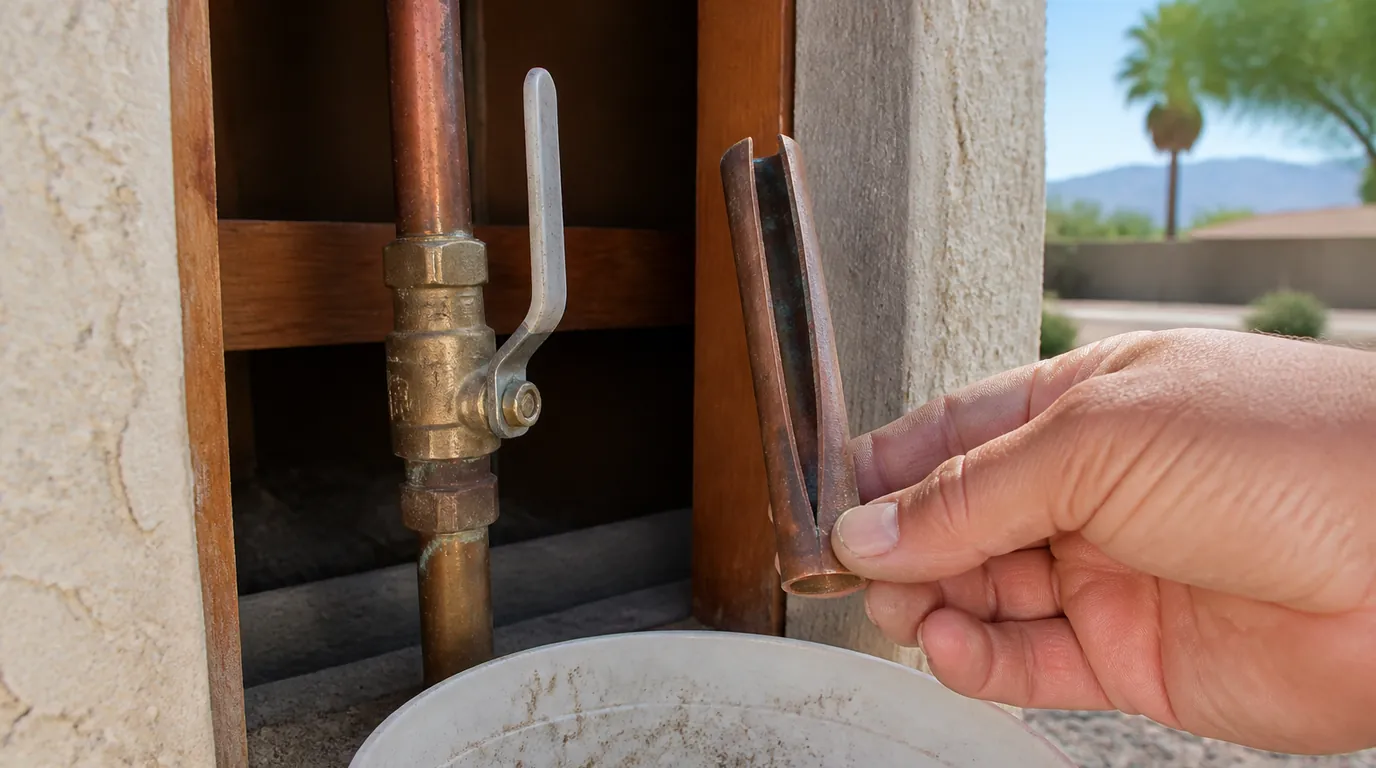
Turn the main shutoff clockwise until it stops. A low faucet then drains the pipes, and a high one lets air in so water can flow out.
If the water heater is affected, switch it off and close its cold supply. That protects the elements and the tank from running dry.
Pipes fail where they are weakest. Corroded copper and galvanized steel give way at joints, a fitting can crack from vibration or heat, and a supply valve can snap when it has been left untouched for years.
Cheap or aging plastic connectors behind toilets, sinks and washers are another frequent source. They split without warning and can empty a supply line into a cabinet in minutes.
Long summers stress attic supply lines and flexible connectors, and mineral-heavy water leaves scale that can corrode fittings from the inside.
Rare winter cold snaps can also catch exposed hose bibs and outdoor lines. Insulating them and knowing where the main valve sits are small steps that pay off.
What a repair costs depends on where the pipe failed and how much must be opened to reach it.
Ask for the quote before work begins and what it covers, including drywall access and cleanup.
With the water off, the plumber opens the area, cuts out the damaged piece and installs a new section with proper fittings. A short repair on a burst copper or PEX section is often quick once the contractor has parts on the truck.
Afterward the line is pressure tested before the walls or floor are closed. Ask what warranty, if any, the contractor offers on the repair.
A single failure in a healthy line is a one-time repair. A second or third pinhole in the same house points to pipe that is wearing out everywhere.
In that case, ask about repiping before paying for repeated patches. If the leak is hidden, start with leak detection.
Water you can see is easy. These quieter clues also count.
Close the main shutoff and drain the lines by opening a few faucets. Take photos of the burst area and the water on the floor before cleanup.
Move furniture and electronics out of the wet zone and place towels or a wet vacuum where you can. Switch off power to that room from a safe spot if water is near outlets.
Once the water is off, the plumber looks at the break and tests the surrounding pipe. A pipe that is thin, corroded or full of pinholes will fail again beside a patch.
Pressure testing the repaired line confirms the repair holds. If the pressure drops again, the contractor checks the next section down the line.
A cracked copper pipe is usually cut and replaced with a new section. A broken shutoff valve or supply stop is swapped and tested.
A broken line under a house or a slab is a different job. See slab leak repair for those cases, where a reroute may beat breaking concrete.
Pinpoint where hidden water is escaping, whether in a wall, under a floor or along the buried pipe, before any demolition starts.
Trace the source of a ceiling stain, bubbling paint or a soft wall, then fix the pipe behind it.
Dry and rebuild floors and walls after a leak, a burst pipe or flooding.
Close the main water valve and phone. If water reaches outlets, turn that area off at the panel from dry ground and move belongings out of the wet zone.
Yes, if the water heater is part of the failure or the house has lost its supply. Turn it off at the switch or the gas control and close its cold supply.
Many policies cover sudden water damage but not the pipe itself. Take photos before cleanup and call your insurer promptly.
Call the 24/7 line and describe it. A contractor may be able to stop the flow and repair the failed section, with timing based on the schedule.
The price depends on pipe type, location and how much has to be opened. A written quote that includes access and cleanup avoids surprises.
Ask the dispatcher about the fastest arrival window. Active flooding gets priority, and closing the main valve controls the damage until the plumber arrives.
When the rest of the pipe looks healthy, patching the one failure makes sense. If it is corroded or has split before, ask what a longer replacement would involve.
Close the main and call. Mention the recent heater work so the plumber checks the connections and the pressure on the line first.
Close the main, drain the lines through a low faucet and phone. The dispatcher asks what burst and where, then puts you through.
Service area centered on Avondale and nearby Maricopa County cities.