Leak Detection
Pinpoint where hidden water is escaping, whether in a wall, under a floor or along the buried pipe, before any demolition starts.
Water seeping up through the floor, a warm patch on the tile or a meter that races with everything off can all mean a slab leak. A plumber finds the pipe under the concrete and lays out the repair choices. A slab leak that is soaking flooring is worth a call at any hour.
Close the main valve first if water is surfacing, then call and describe where the floor feels warm or wet.
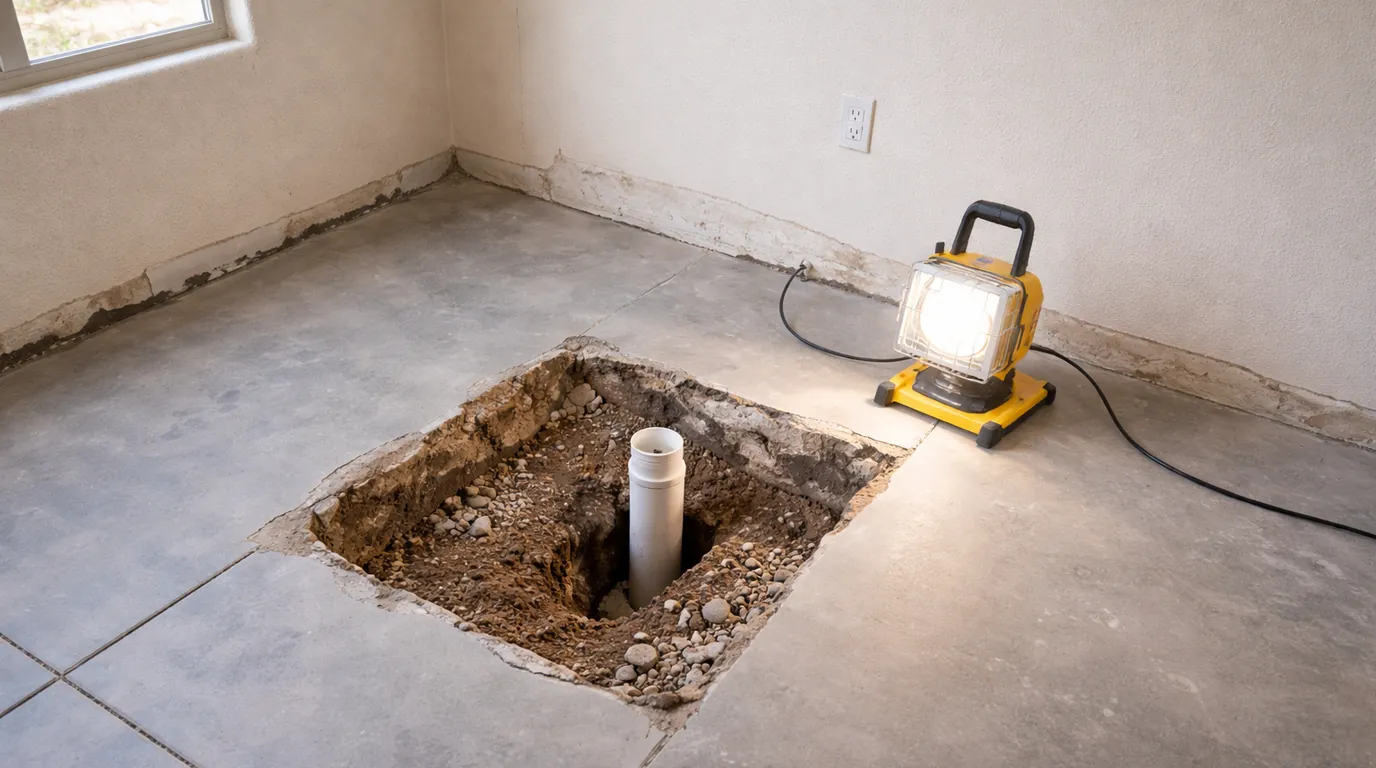
A slab leak is a failure in a pipe that runs beneath or inside the concrete foundation. Hot and cold supply lines are the likeliest culprits, though a drain line can fail there too.
Houses built on slabs often route plumbing beneath the floor. When a pipe wears through at a fitting, rubs against gravel or corrodes, water collects under the concrete and eventually finds a way up.
The plumber first confirms the leak with a meter test and by isolating the hot and cold sides. Then the contractor traces the line, often by listening at floor level and scanning for a warm spot.
Some contractors use additional locating tools, so ask which methods will be used and how close the marked spot is likely to be. A clear mark matters because it decides how much floor gets opened.
Avondale grew quickly after incorporation in 1946, and slab foundations are common across the Valley. Where a house sits on a slab, some plumbing may run beneath the floor.
That is why a warm spot on tile in a hallway or a meter that moves overnight deserves attention here. A slab leak rarely fixes itself, and wet soil beneath a foundation can make a small problem larger.
Spot repair means cutting the slab above the leak, fixing the pipe and patching the concrete. It suits a single failure in an otherwise sound line.
Rerouting abandons the leaking run and installs new pipe overhead or through walls. It avoids the slab and can be sensible when the old line is failing in more than one place.
When several leaks appear across a house, the better answer may be repiping the whole house. A contractor should explain each option and its price before work begins.
Opening a slab is noisy and dusty. Expect furniture to be moved and flooring in the work area to be cut or lifted.
If water has already soaked carpet, tile underlay or drywall, the structure needs drying. See water damage restoration for that part of the job.
Slab work covers detection, access and repair, and each stage has its own variables.
Get the quote in writing and ask whether tile, carpet and concrete patching are included.
Several of these together make a slab leak more likely.
Closing the main valve slows the loss and limits water on the floor. If the leak seems to be on the hot side and the floor is warm, switch off the water heater too.
Raise rugs and furniture legs off wet flooring and lay towels along the baseboards. Where water reaches outlets or power strips, unplug devices from a dry spot.
The visit starts with a pressure test on the cold and hot lines separately. A line that drops pressure is isolated by section.
Then the contractor works across the floor, listening for the sound of water and noting warm zones. The suspected area gets marked with paint or tape.
If the answer is still unclear, the plumber may suggest a camera or tracer method. The goal is to open the slab once, in the right place.
Opening the slab suits a single failure in a line that is otherwise healthy. Rerouting overhead can be the faster choice when the pipe route under the floor is difficult to reach.
Ask what each choice does to your walls and ceilings, since overhead pipe may mean access holes in drywall. Compare the price, the mess and the warranty terms.
Houses with older galvanized or copper pipe may leak again elsewhere. In that case ask about burst pipe repair history and a full repipe quote.
Pinpoint where hidden water is escaping, whether in a wall, under a floor or along the buried pipe, before any demolition starts.
Swap out worn supply piping across the house once patching no longer holds.
Dry and rebuild floors and walls after a leak, a burst pipe or flooding.
Water coming up through the floor, a hot spot underfoot or a meter that will not stop all justify a quick shutoff and a call. A slow, steady leak with no damage can wait for a scheduled visit.
Yes, in most cases. The plumber locates the leak from above using listening and thermal methods and then opens only the marked spot.
Policies vary. Some pay for resulting damage and for opening the slab, while most do not pay to replace worn pipe. Check your policy and contact your insurer early.
Often not, but the work area is noisy and dusty and the water may be off for part of the day. Ask the contractor how long the shutoff will last.
The price depends on the leak's depth, the repair path and the flooring above it. Ask for a written quote that lists detection, access, repair and surface restoration separately.
Sometimes. A simple spot repair may fit in a visit, and a reroute or repipe takes longer. Ask the dispatcher about same-day openings and the likely duration.
The plumber marks the spot, then the work may require a saw cut and patch. Call 811 before any digging so buried lines are marked.
The owner or property manager has to approve work that opens a floor. Tell the dispatcher who owns the property so approvals do not slow the repair.
Shut the main valve if you can reach it, then call. Say where the floor is wet or warm and the dispatcher takes it from there.
Service area centered on Avondale and nearby Maricopa County cities.