Water Filtration Installation
Add whole-house or under-sink filtration to improve taste, odor and sediment.
Hard water leaves white scale on faucets, spots on glass and buildup inside heaters. A water softener swaps hardness minerals for sodium or potassium. We cover how to size one, what to ask and how repairs work.
Check your local rules and your HOA before installing, since some areas limit softener discharge.
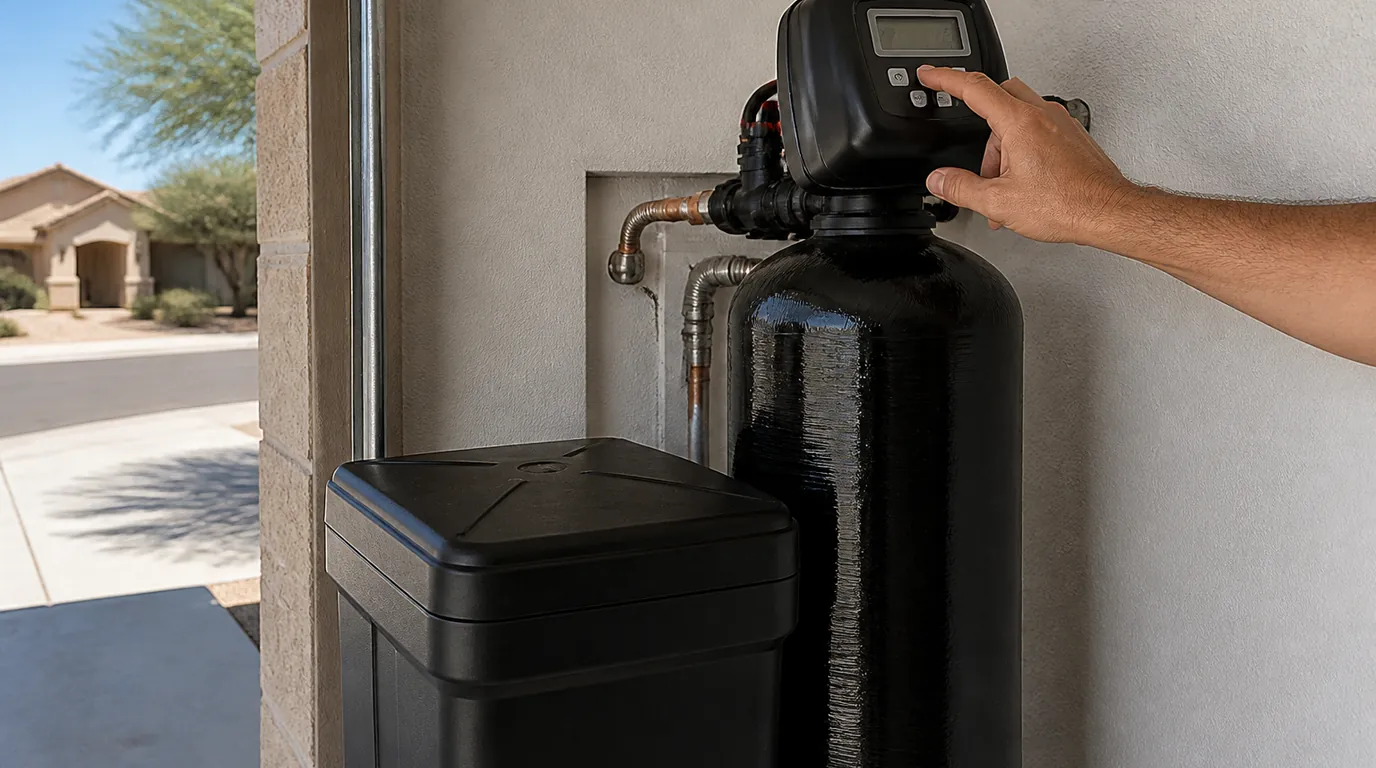
Hard water leaves scale on fixtures and inside appliances. One third-party estimate for ZIP 85323 places hardness near 14 grains per gallon, which is considered very hard.
Over time, scale reduces water heater efficiency and clogs aerators and showerheads.
Water passes through resin beads that capture calcium and magnesium. When the beads are full, the system regenerates with a brine solution and flushes the minerals to drain.
Salt or potassium is added to the brine tank on a schedule.
Softener cost follows unit size, features and installation work.
Ask about salt use, regeneration schedule and warranty.
Size depends on household size, hardness and daily water use. Place the unit where the main water line enters, with a drain nearby and power for the controller.
An outdoor hose bib line can be left untreated so the yard does not get softened water.
Problems include a resin tank that no longer softens, a stuck valve, a failed controller or a brine tank that clogs. Many are fixable without replacing the whole unit.
Resin beads last for years, but chlorine and age shorten their life.
Some Arizona communities restrict or regulate softener discharge. Ask the contractor and your HOA about any local rules before installing.
The city says its water comes from groundwater, Colorado River water through Phoenix and surface water, so hardness can vary a little over time.
These show that minerals are building up.
Locate your main water shutoff and clear space around the proposed spot. Note whether you have a drain and an outlet nearby.
A simple hardness test strip gives a baseline. A lab test is more precise.
The plumber tests hardness, checks pressure and looks at where the main line enters the house. For a repair, they test the controller, valve and resin.
They then explain what is wrong and what it costs to fix.
A softener treats hardness. A filter treats taste, chlorine or sediment. Many homes use both.
Read water filtration to compare.
Many homes benefit because the water is hard. Testing your own water tells you for sure.
No. A softener addresses hardness. A filter handles other concerns.
It depends on size and usage. Check the tank monthly at first.
Softened water adds a small amount of sodium. Ask a doctor if you are on a low sodium diet.
Cost depends on size, features and installation. A written quote should list each part.
Ask the dispatcher about scheduling. The plumber may need to see the main line first.
Tell the dispatcher your brand and the symptom. Many repairs are brand-independent.
Reducing scale generally helps heaters and appliances last longer.
Yes. The line is answered 24/7. If the brine tank or valve is leaking, turn the bypass or the main supply and call. Routine servicing is scheduled for daytime.
Add whole-house or under-sink filtration to improve taste, odor and sediment.
Work out why a tank leaks, rumbles, runs lukewarm or loses its pilot flame.
Descale an on-demand heater, diagnose an error code or install a new unit.
Call and ask about sizing a softener for your household. The plumber can test your water and quote the work.
Service area centered on Avondale and nearby Maricopa County cities.