Water Softener Installation & Repair
Fit a softener to tame hard water, or revive one that has stopped regenerating.
Filtration can sharpen taste, cut chlorine and trap sediment. Which system fits depends on your water and your goal. This page covers how to choose and what installing one involves.
Ask for a water test first. Filters target specific things, and a test shows what you actually need.
Taste, odor, cloudiness, sediment and spotting each point to different treatments. Hardness is handled by a softener, not by most filters.
The city publishes an annual water quality report, which is a good starting point for what is in the supply.
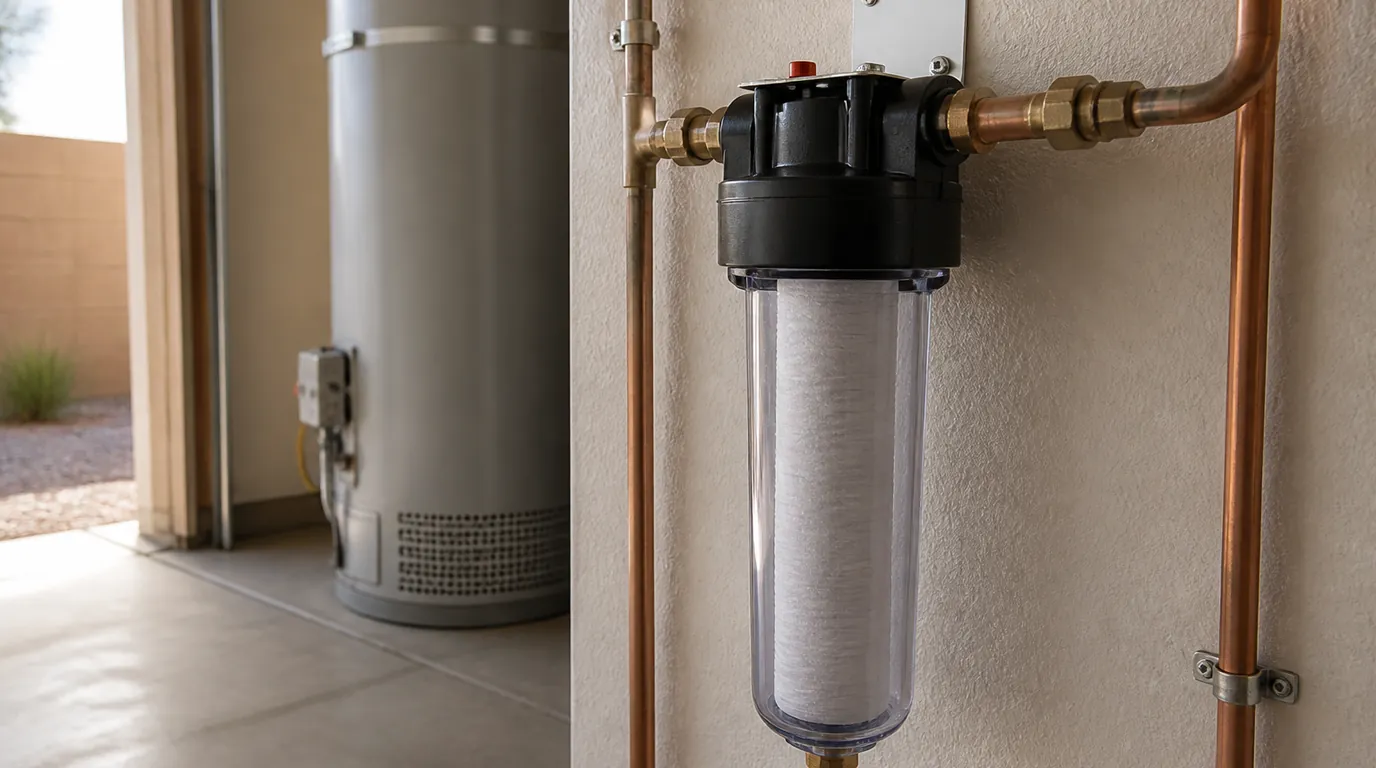
A whole house filter installs at the main line and treats every tap. Sediment and carbon filters are common. They protect fixtures and improve taste.
These need periodic cartridge changes and some require a bypass and pressure gauge.
An under sink filter treats water at the kitchen tap. A reverse osmosis system adds a membrane and a small tank, and it needs a drain connection and a dedicated faucet.
Many households use RO for drinking and cooking and a whole house filter for the rest.
Filters only work if cartridges are changed on time. Ask the plumber for a schedule and for the cartridge part numbers.
Neglected filters can slow flow and reduce quality.
Filter systems vary widely in price and upkeep.
Ask for the yearly cartridge cost, not only the install price.
Any of these can justify a filter.
Locate the main shutoff and note where you want the filter. Gather any water test results or the latest city quality report.
Tell the plumber what you want to change: taste, odor, sediment or all three.
The plumber reviews your goals, checks pressure and looks at the installation spot. They may test water at the tap.
They then recommend a system and explain upkeep.
Filters target contaminants and taste. Softeners target hardness. Many homes pair them.
Read water softener installation for the hardness side.
The city's water is a blend of groundwater, Colorado River water through Phoenix and surface water, and the annual report lists what it tests for.
Homes with older galvanized lines may see sediment. The city completed a lead service line inventory in October 2024 and identified lines for replacement, so ask the city about your address.
Fit a softener to tame hard water, or revive one that has stopped regenerating.
Work out why a tank leaks, rumbles, runs lukewarm or loses its pilot flame.
Cure dripping faucets, sluggish flow, frozen stop valves and weeping hose bibs.
That depends on what you want removed. A water test, plus a talk about taste or sediment, points to the right choice.
Most do not. A softener handles hardness.
It depends on the system and use. Follow the manufacturer's schedule.
Typically not for a basic filter, but ask the contractor.
Cost depends on system type, media and installation. Ask for the upkeep cost too.
Ask the dispatcher about scheduling and whether the plumber needs a site look first.
Tell the dispatcher you want RO so the right plumber and parts are sent.
A test helps match the filter to what is actually in the water.
The dispatch line is open around the clock. A leaking filter housing is worth a prompt call, while a new installation can wait for a scheduled visit.
Call and describe what you want to improve. The plumber can recommend a system and quote the work.
Service area centered on Avondale and nearby Maricopa County cities.