Water Heater Installation & Replacement
Retire a worn tank and pick a size, fuel type and spot that suit the house.
Tankless units heat water on demand and save floor space, but they are sensitive to scale, gas supply and venting. This page covers installation, descaling and common error codes in a hard water area.
Have the brand, model and any error code ready when you call.
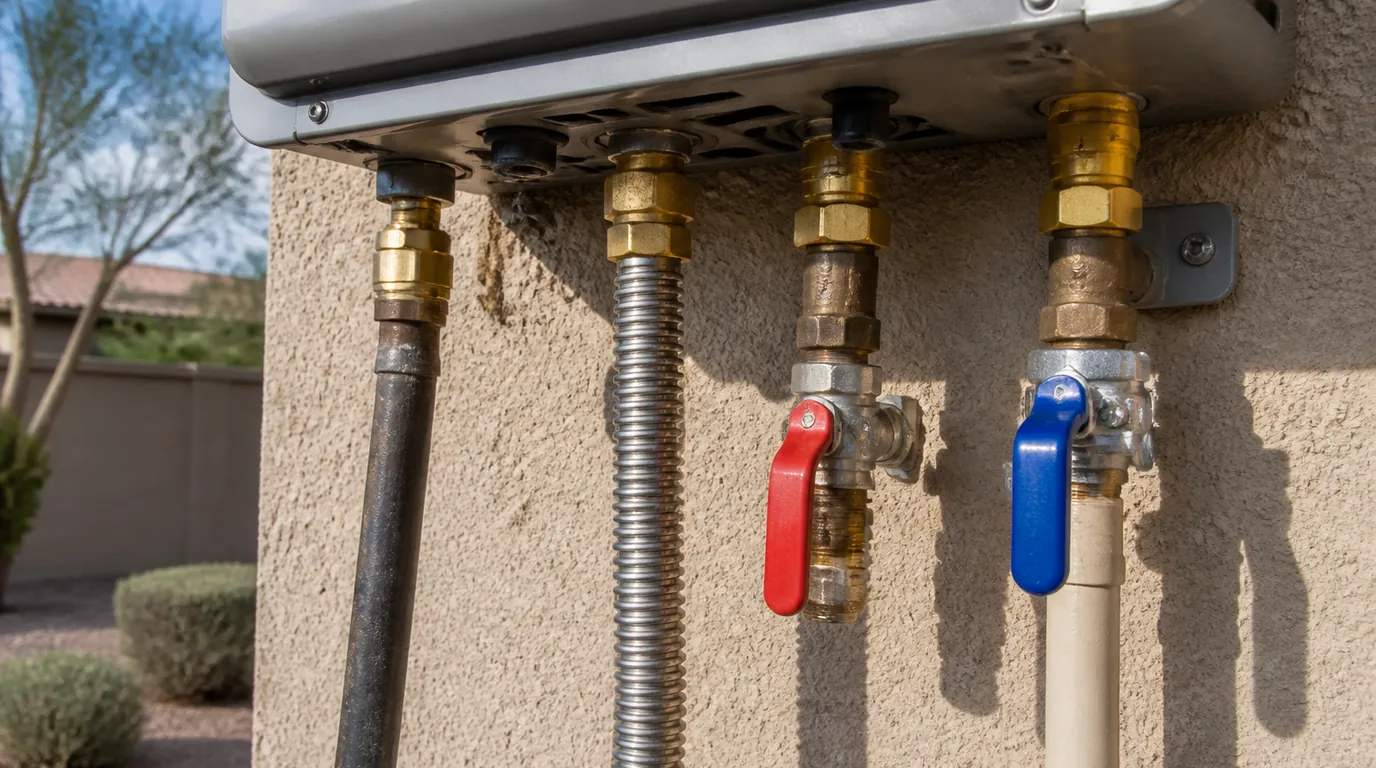
A burner or element heats water as it flows through a heat exchanger. There is no storage tank, so hot water does not run out unless demand exceeds the unit's rating.
Because the exchanger is narrow, scale can restrict it quickly.
Hard water leaves mineral scale inside the heat exchanger. Avondale water is hard, with one third-party estimate for ZIP 85323 around 14 grains per gallon.
Many manufacturers recommend periodic descaling, and a softener or scale filter upstream can reduce buildup.
Sunbaked supply lines can mean the cold water arrives warm in summer, so the unit has less heating to do, while scale remains the main concern.
Garage and exterior wall installs need venting that keeps exhaust away from openings.
Gas models need a gas line sized for the unit, a vent that meets the manufacturer's rules and a condensate drain on condensing models. Electric models need adequate electrical capacity.
Replacing a tank with a tankless unit often means upgrading the gas line or the vent. The plumber should check both before quoting.
Call for no hot water, fluctuating temperatures, a repeating error code or reduced flow. Describe what the display shows.
If you have never descaled the unit, say so. Some problems clear after a proper flush.
Tankless work costs follow the unit and the supporting infrastructure.
Ask whether a softener or scale filter should come with the install.
These point to scale or a venting problem.
Note the display code and take a photo. Locate the isolation valves and gas shutoff.
Tell the plumber when the unit was installed and whether it has ever been descaled.
The plumber reads the code, checks gas pressure or power, inspects the venting and tests flow. They may flush the heat exchanger to restore flow.
You get a clear explanation of the fault and options.
Many issues come down to scale and respond to a flush. Failed sensors and fans can be replaced. A unit with a cracked exchanger may be near the end of life.
Read water softener options to reduce future scale.
Retire a worn tank and pick a size, fuel type and spot that suit the house.
Fit a softener to tame hard water, or revive one that has stopped regenerating.
Install, test or repair gas lines for ranges, dryers, grills, fire pits and heaters.
Follow the manufacturer's schedule. In hard water areas, many recommend more frequent service.
It depends on the brand. The display points to venting, flame, flow or sensor faults, and the plumber can read it.
Not required, but a softener or scale filter helps protect the heat exchanger in hard water.
Often yes, though gas line size and venting may need upgrades.
The price depends on whether it is a flush, a part or an install. Ask for a quote before work starts.
Call the 24/7 line and ask about arrival times. Having the brand and error code ready helps.
Tell the dispatcher your brand and model so the right plumber is sent.
Low flow, scale or a sensor fault can cause it. A plumber can test each.
Note the error code, then call. The dispatcher connects you with a plumber who services tankless units.
Service area centered on Avondale and nearby Maricopa County cities.