Water Heater Repair
Work out why a tank leaks, rumbles, runs lukewarm or loses its pilot flame.
When the tank is leaking or past its useful life, replacement beats another repair. This page explains how to choose size, fuel and features, and what a good installation includes in an Arizona home.
Tell the dispatcher your current tank size, fuel type and whether it sits in the garage or a closet.
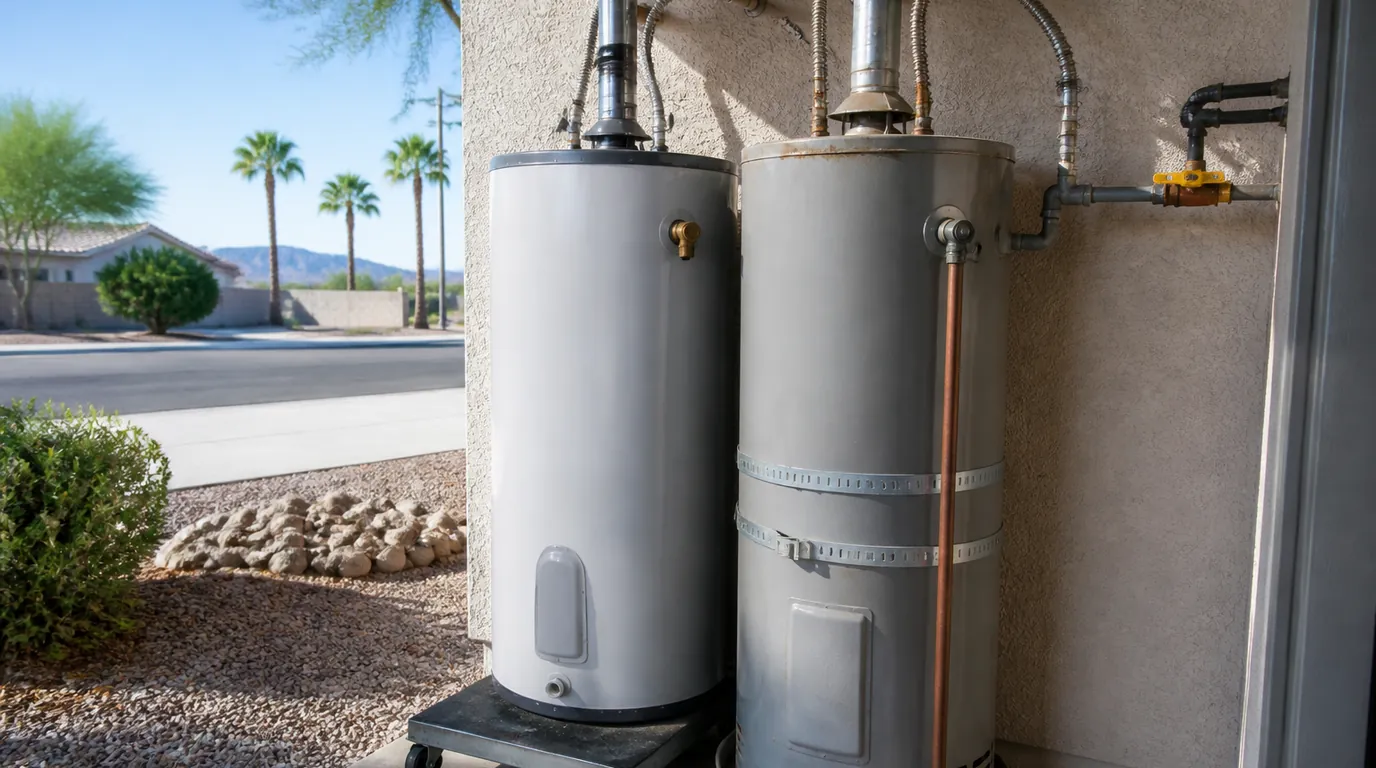
A tank that leaks through the shell, rusts inside or needs repeated repairs is a candidate. Age matters too, and the serial number reveals it.
Planning a replacement on your own timeline beats a flood at midnight.
Size depends on household size and how many fixtures run at once. A larger family with several showers needs more capacity or a faster recovery rate.
The plumber can look at your current use and suggest a size. Do not pick a size from the old tank alone, because your household may have changed.
Installation cost follows the unit, the install complexity and any code upgrades.
Ask for a quote that lists the unit, the parts, removal and permit in separate lines.
Many Avondale water heaters sit in garages where temperatures climb in summer, so ask about a drain pan and insulation for the pipes.
Permits and inspections vary by jurisdiction. Ask the contractor who handles them and how that affects timing.
New supply connections, a working temperature and pressure relief valve with a proper discharge line, an expansion tank where needed, and correct venting or electrical work. Gas units need a sediment trap and a leak-tested gas connection.
Ask the plumber to haul away the old tank and to explain permit and inspection steps.
Hard water shortens tank life. A softener or regular flushing can help, and some tank warranties assume proper maintenance. Read the warranty terms before purchase.
The plumber should show the model, the warranty length and what is covered.
Several of these together suggest it is time.
Clear a path to the heater and note the brand, size and fuel type. Take a photo of the label.
Decide whether you value lowest upfront cost, longer warranty or higher efficiency. It guides the quote.
The plumber checks the existing connections, venting, gas or electrical supply and any code issues. They measure the space and confirm what fits.
You get a written scope before the old unit comes out.
A tank is simple and familiar. Tankless saves space but needs adequate gas and venting. A heat pump unit is another option for some homes.
Read tankless water heater service and water heater repair if you are still deciding.
Work out why a tank leaks, rumbles, runs lukewarm or loses its pilot flame.
Descale an on-demand heater, diagnose an error code or install a new unit.
Install, test or repair gas lines for ranges, dryers, grills, fire pits and heaters.
A standard tank swap often fits in a half day, depending on access and any code work.
Tankless can suit some homes, but it needs the right gas and venting. See the tankless page for tradeoffs.
You can, but check whether it still fits your household.
Often yes. The contractor typically handles it, but confirm in the quote.
Cost depends on the unit, the install and code upgrades. A written quote should list each part.
Ask the dispatcher about same-day openings. Units in common sizes are often easier to schedule.
Ask whether haul-away is included in the quote.
Size follows household headcount and how many fixtures run together. A plumber can recommend one.
Call and describe your current tank. Ask for a written quote with the unit, parts and permit itemized.
Service area centered on Avondale and nearby Maricopa County cities.