Pool Leak Detection & Repair
Sort evaporation from a real leak and trace it to a pool line, fitting or valve.
A pool in the desert loses water every day to heat, sun and wind. The hard part is telling normal loss from a leak. The bucket test is a simple method that gives you a fair answer in about a day.
By the Avondale Plumbing Co. team ·
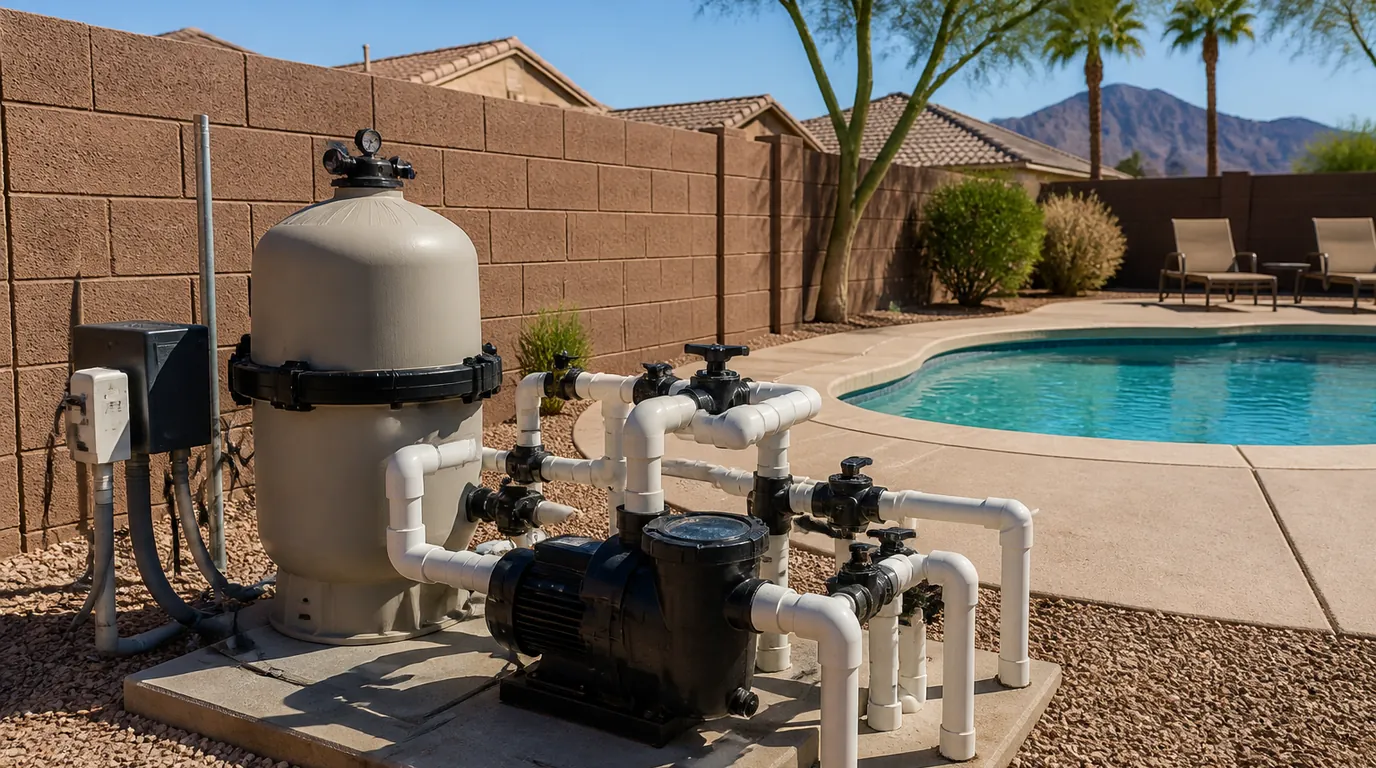
Evaporation is steady in hot, dry weather, and wind and splashing add to it. A pool can lose a quarter inch or more per day in summer without any leak at all.
A pool with a leak loses more than that, and the loss continues when the weather cools. That is the signal the bucket test measures.
Scoop pool water into a bucket until it is about an inch from the top. Rest the bucket on the top step, so its water sits level with the pool. Use tape or a marker to mark the water line inside the bucket and on the outside.
Turn off the autofill so it does not change the level. Do not swim or run the waterfall during the test.
Leave everything alone for 24 hours. Then compare. Both the bucket and the pool lose water to evaporation. If the pool dropped more than the bucket, the extra drop may be a leak.
A difference of a quarter inch or more is worth a second look. Repeat for a second day if the first result is close.
When the first result hints at a leak, run the test again with the pump switched off for a full day. Record both water levels once more. If the loss slows or stops with the pump off, the leak is likely on the pressure side, such as a return line or a fitting.
A loss that matches the pump-on result points more toward the shell, the skimmer, the light niche or a fitting in the pool itself.
After a full day, measure both water lines and match the result below.
| Result | What it suggests | Next step |
|---|---|---|
| Pool and bucket dropped the same | Evaporation | Repeat on a second day |
| Pool fell at least a quarter inch more than the bucket | Leak probable | Repeat with the pump off |
| Loss eases once the pump is off | Leak on the pressure side, like a return line | Have the lines pressure tested |
| Same loss with the pump off | A shell, skimmer, light or fitting leak | Call for a pool leak search |
Check the equipment pad for wet ground, a pump that loses prime or air in the basket. Look for cracks in the shell or tile line and gaps around lights. Wet spots near the pool or soggy decking can mark a buried line.
A rising water bill and a pool that needs constant topping off are further hints.
Return lines, skimmer connections, light niches, pump seals and valves are common culprits. Plaster cracks and tile line gaps also leak.
A leak search uses pressure tests, dye and listening gear to pin down the spot. Read pool leak detection and repair for what a visit covers.
Do not keep topping off without tracking how much you add. Do not use sealants without finding the leak first. Do not dig around a pipe you only suspect.
A written log of what you add each week helps a technician.
Placing the bucket on the deck, not on a step, gives a false result, because the water inside must sit at the pool's level to match conditions. Running the pump, splashing or letting the autofill kick in during the test also changes the numbers.
Take readings at the same time each day and write them down. Use a ruler for accuracy, not an eyeball estimate.
Track how much water you add each week and the date. A pool that needs the same top-off in cool weather as in hot weather is losing more than evaporation can explain.
Bring the log to a technician. It shortens the search and helps decide whether the leak is large or small.
A small leak can look harmless, but water that escapes under a deck or around the shell can wash out soil and shift concrete. Treating it early protects the pool structure and the surrounding ground.
A leak also raises chemical and water costs. Fixing it earlier usually costs less than waiting.
In peak summer heat, evaporation can be large, so a pool and bucket may both drop by more than a quarter inch in a day. The test still works, because you compare the two numbers, not the raw loss.
If the numbers are close, repeat the test on a calm day and on a windy one. Wind can move more water out of a pool than out of a shielded bucket, which can skew a single reading.
Write each result in a notebook with the date, the weather and whether the pump or autofill was running, so you can compare runs later and show a plumber what you saw.
Call if the test shows a leak, if the pool keeps dropping or if you see wet ground near the equipment. A technician confirms the leak and finds the exact location.
If the leak is in a buried line, see water line repair. If the bill is the main concern, read high water bill leak detection.
In hot desert weather, a quarter inch or more a day can be normal. The bucket test separates it from a leak.
Yes for the first test. Then repeat with the pump off if needed.
That points to evaporation.
Yes. Water under the deck or around the shell can wash out soil.
A technician with testing tools. Ask the dispatcher.
Sort evaporation from a real leak and trace it to a pool line, fitting or valve.
Find out why a bill jumped or the meter will not stop, and whether a leak is the cause.
Repair or replace the underground line that feeds water into the house.
With a meter, some dye tablets and a slow walk through each room, you can shrink a hidden leak to one zone before phoning a plumber.
A bigger bill almost always has an ordinary explanation. Walk through the likely ones before blaming the meter.
A drip at the handle or water behind the wall from a hose bib can waste water and damage the house. Learn the simple fixes.
Call and say what the bucket test showed. A dispatcher will find the right plumber for the job.
Service area centered on Avondale and nearby Maricopa County cities.