Leak Detection
Pinpoint where hidden water is escaping, whether in a wall, under a floor or along the buried pipe, before any demolition starts.
Dry desert air hides leaks well. Water can run inside a wall or under a slab for weeks before a stain, a smell or a bill gives it away. A few simple checks narrow the search before anyone opens drywall.
By the Avondale Plumbing Co. team ·
In a dry climate, small amounts of water evaporate fast. A drip inside a wall cavity may never leave a puddle. It shows up later as a soft spot, a warped baseboard or a musty smell.
Many Avondale homes sit on concrete slabs, and some supply lines run through or beneath them. That adds one more place for water to disappear without a trace. The checks below work whether the pipe is in a wall, in the attic or underground.
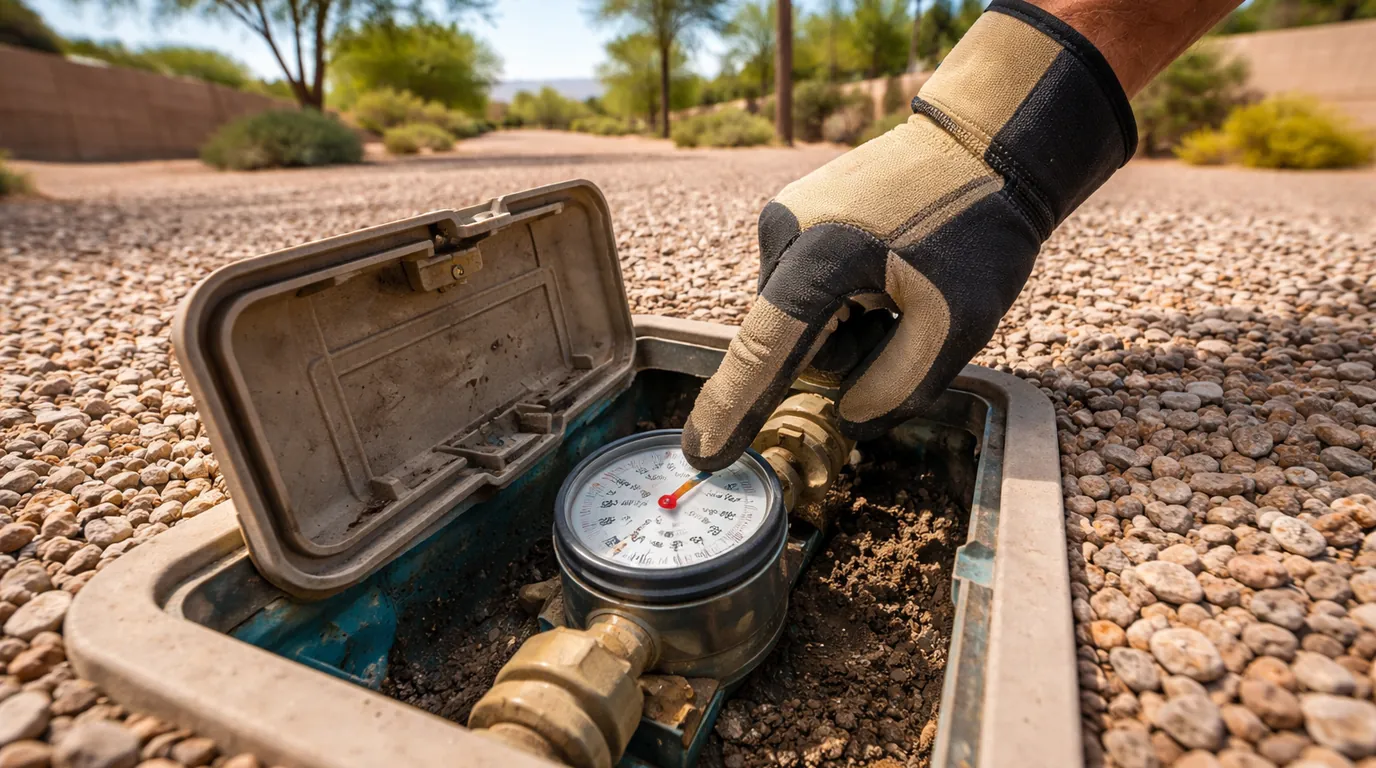
The meter is your best detector. Turn off every tap, make sure the dishwasher and washer are idle and pause the sprinklers. Then find the meter box, usually near the curb, and lift the lid.
Look for the small triangle or dial that spins when any water moves. If it turns with everything off, water is leaving the system. Write down the reading, wait an hour without using water and look again. A changed number confirms a leak.
With flow confirmed at the meter, go to the main shutoff where the pipe enters the house and close it. Check the meter once more. A dial that keeps spinning puts the leak on the underground stretch between meter and house.
A dial that stops means the problem is inside the house or on a branch past the valve. You now know whether to inspect the yard or the fixtures, and a plumber knows which equipment to load.
Toilets come first. A flapper that does not seal lets water trickle into the bowl all day. Drop some dye in the tank without flushing and check the bowl after fifteen minutes. Colored water there means the flapper leaks.
Next, look under every sink with a dry paper towel and run it along the supply lines and valves. Check the water heater base, the washer hoses and the dishwasher connection. Look at hose bibs outside too, since a worn spigot can drip into a bed unnoticed.
Go down the list in sequence. Every check is quick.
| Where | Clue | Quick check |
|---|---|---|
| Toilet | Hissing in the tank, or a bowl that tops itself up | Add dye to the tank and look in the bowl fifteen minutes later without flushing |
| Water heater | Damp floor beneath or rust trails on the tank | Inspect the tank base and the pan, if there is one |
| Under sinks | Stains or a soft, damp cabinet floor | Wipe the supply lines and valves with a dry paper towel |
| Appliance hoses | A wet floor behind a washer or dishwasher | Check each hose and connection |
| Water meter | The small dial turns while every fixture is off | Record the reading, leave water unused for an hour, compare |
Stains on a ceiling, bubbling paint, warped flooring and a musty smell all point to moisture behind a surface. A warm spot on a floor can mean a hot water line under the slab. A hissing sound in a quiet room can mean a pressurized pipe is leaking.
Walk each room slowly and touch the baseboards. Photograph anything odd with the date. That record helps a plumber and an insurer.
Watch for a patch of grass that stays green through dry weather, soil that feels soft or a damp stripe tracing the pipe route. A sprinkler zone that mists, geysers or stays wet after it shuts off is also suspect.
Run each irrigation zone for a minute and watch the heads. A cracked riser or a stuck valve can waste a surprising amount of water, and it shows up on the bill long before the lawn complains.
Leaks are not always in living space. Climb into the attic with a flashlight if you can do it safely, and look at the pipes, the air handler drain and the underside of the roof deck for stains. In a hot attic, a drain line from the cooling unit can overflow and run into a ceiling.
In the garage, look at the water heater, the softener if you have one and any pipes along the wall. A slow drip into a drain pan may go unnoticed for months. Touch the pipes. A damp or cool patch on an otherwise dry wall is worth a note.
A bill that creeps up over several months points to a slow leak, while a sudden jump points to something that failed. Pull out the last twelve months and mark the usage in gallons. Compare spring and fall months, since irrigation changes the pattern.
If you can see a steady rise with no change in habits, treat it as a leak until the meter test proves otherwise. A plumber appreciates this record, because it shows when the problem may have begun.
Do not cut into drywall on a guess. A moisture meter or a thermal camera can show wet areas without opening anything. Do not run a pressure washer on a spot you suspect is leaking, and do not use chemical drain products if you think the leak is in a drain, since they can harm old pipe.
Do not ignore a small stain. Stains grow, and the structure behind them stays wet as long as the leak runs.
If the meter shows flow and the toilets and fixtures check out, it is time for professional leak detection. A plumber isolates sections with pressure tests and brings listening gear and a thermal camera to pinpoint the spot, so only a small patch of wall or floor is opened.
A leak on the buried line is a job for water line repair. A leak under the floor may call for slab leak repair. If water is spreading, shut the main valve before anything else, then phone.
Often, yes. The meter, dye in the toilet tanks and a close look under the sinks cover the most frequent sources.
Shut the main valve and watch the meter. Continued movement means an outdoor leak on the buried pipe, while a stopped dial sends you indoors.
Not always. Warm floor spots, the sound of running water and a high bill are common clues.
It depends on the policy. Certain ones cover locating a sudden leak yet exclude replacing worn pipe, so check with your insurer before booking.
Not long. A running leak keeps wetting the structure and raises the bill. Shut off the main valve if water is visible, and book a leak search.
Pinpoint where hidden water is escaping, whether in a wall, under a floor or along the buried pipe, before any demolition starts.
Pin down a supply pipe that is leaking beneath the foundation slab and repair it.
Repair or replace the underground line that feeds water into the house.
A bigger bill almost always has an ordinary explanation. Walk through the likely ones before blaming the meter.
Hissing or random refilling means water is draining away all day. Most cases trace back to the flapper or the fill valve.
Know where the shutoff is before a pipe bursts. Learn the two valves, which way to turn them and how to test that they hold.
Call and describe what you found. The dispatcher will line up a plumber for you.
Service area centered on Avondale and nearby Maricopa County cities.