Faucet & Sink Repair
Cure dripping faucets, sluggish flow, frozen stop valves and weeping hose bibs.
An outdoor spigot, also called a hose bib, is easy to forget until it drips. A small leak wastes water and can soak the wall behind it. Where the water appears tells you what to do.
By the Avondale Plumbing Co. team ·
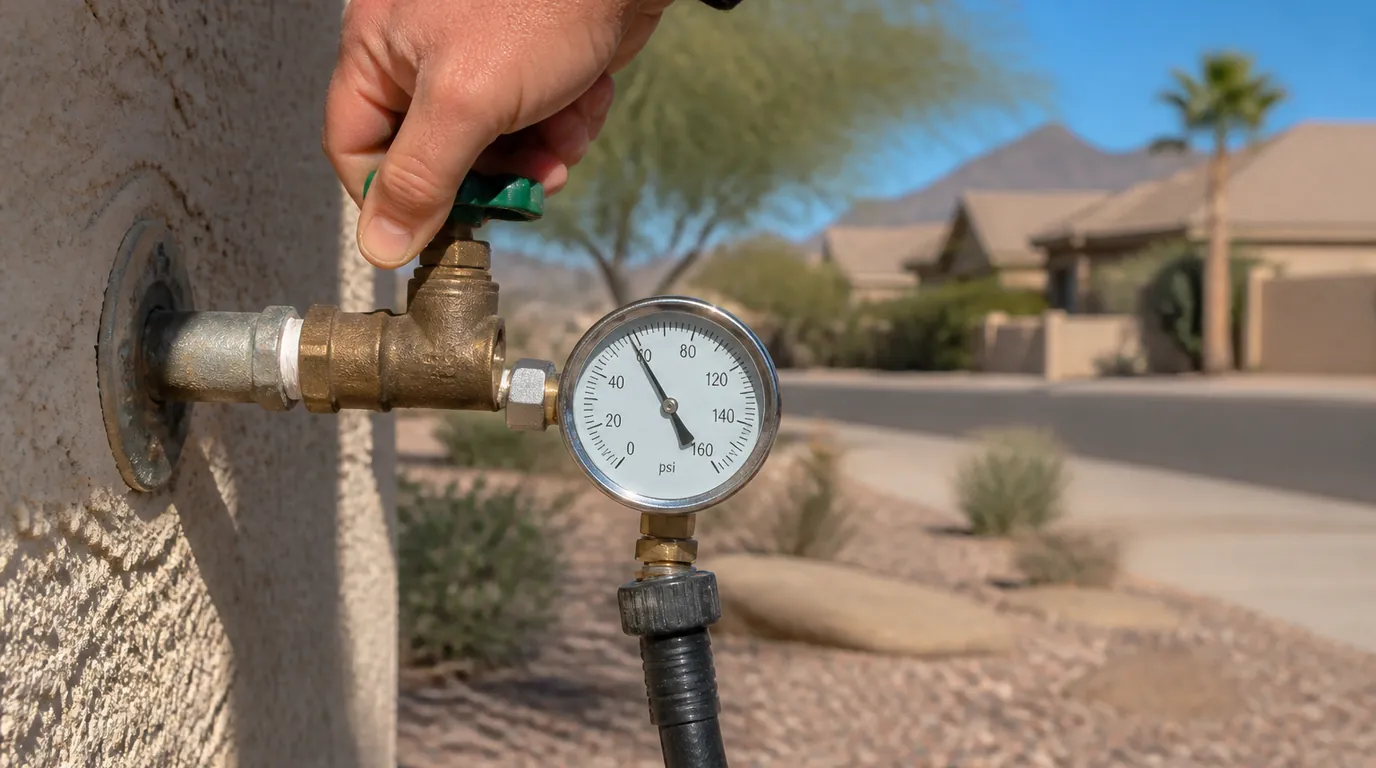
Leaking from the spout when the handle is closed usually means a worn washer inside. Leaking around the handle stem means the packing is worn. Leaking from the vacuum breaker cap at the top is a separate part.
Dripping inside the wall, seen as a damp spot or a stain on the inside, means the pipe or the connection behind the spigot is leaking.
Behind the handle, a nut presses packing material around the stem. If water seeps there, a quarter turn with a wrench may stop it. Do not overtighten, since the handle should still turn.
If tightening does not help, the packing needs replacing. A plumber can do it quickly, and some hardware kits include a new packing string.
Turn off the water to the spigot. Many have a shutoff inside the house. Unscrew the stem and replace the rubber washer at the end. Hard water and sun wear them out.
If the seat inside the spigot is rough, a new washer may still leak. Then the whole spigot is a better replacement.
Many spigots have a small cap that acts as a backflow device. It may spit water when the hose is on, and that is normal. A continuous leak from it when the handle is off is not.
Replace a failed breaker or the whole spigot. Read backflow testing and prevention for larger devices.
The leak location tells you the fix.
| Location | Cause | Fix |
|---|---|---|
| Spout when closed | A worn washer | Replace the washer or spigot |
| Around the handle | Worn packing | Snug the nut or replace the packing |
| Top cap | A failed vacuum breaker | Replace the breaker |
| Inside the wall | A pipe or fitting leak | Plumber repair |
A hose left on all day can keep the spigot pressurized and push water past worn parts. Remove hoses when not in use, and store them out of the sun.
Sun can also bake plastic fittings. A shaded spot or a cover helps.
A damp wall or a stain below the spigot suggests a leak in the pipe or a loose connection. Do not ignore it. Water in a wall can rot framing and feed mold.
A plumber can open a small section, repair the pipe and replace the spigot. If the wall stayed wet, ask about ceiling and wall leak repair.
Frost-free models have a long stem that places the valve inside the warm wall. They are common in cold places, and many homes here use simpler ones.
If you travel in cold weather, protect any spigot, since a rare hard freeze can crack a pipe.
Gather an adjustable wrench, replacement washers, packing string and a new spigot in case the old one is damaged. Turn off the water to the spigot at the interior shutoff if there is one, or at the main valve if there is not.
Open the spigot to relieve pressure and drain the line. Then decide whether the leak is at the handle, the spout or the connection.
A spigot with a cracked body, a bent stem or a rough seat is past repair. So is one that is loose in the wall or that leaks from the pipe where it joins the house.
A new spigot is inexpensive and takes little time. Replacing a worn one is better than patching it several times.
Water that runs down a stucco wall can stain it and soak the base. Look for dark streaks, cracks in the finish and wet soil in the bed below the spigot.
Fix the leak first, then dry the area. If the wall stayed wet for weeks, have it checked for hidden damage, since moisture can stay in the framing.
Sun and heat bake hoses, washers and plastic fittings. Replace worn hoses, shade the spigot where you can and avoid leaving a hose under pressure all day. A cheap timer or a quick-connect fitting reduces wear.
Once a year, test every spigot. Open it, look for drips from the stem and spout, close it and check the wall below. A two-minute walk around the house catches small leaks before they stain the wall.
Look for a brass body, a solid handle and a vacuum breaker if local rules require one. Match the connection type to the pipe, since threaded, soldered and push-fit versions differ.
Ask whether the plumber tests the shutoff and the line after the swap. A good install ends with a pressure check and a look at the wall for dampness.
Phone if the leak is inside the wall, the shutoff will not close or the spigot wobbles in the wall. A plumber can swap it out and test the line.
A new spigot is a small job, and it prevents water loss and damage.
Water slips past when the washer on the stem end wears down. A fresh washer fixes it, or the whole spigot can be replaced.
It wastes water and can soak the wall. Fix it.
Often yes, if you can shut off the water. A soldered connection is better left to a plumber.
A small backflow device that keeps hose water out of the house supply.
A pipe or fitting inside the wall may be leaking.
Once or twice a year is enough. Open each one, look for drips and check the wall below for damp spots.
Cure dripping faucets, sluggish flow, frozen stop valves and weeping hose bibs.
Test, repair or install the valve assembly that guards drinking water from yard and pool lines.
Trace the source of a ceiling stain, bubbling paint or a soft wall, then fix the pipe behind it.
A bigger bill almost always has an ordinary explanation. Walk through the likely ones before blaming the meter.
Know where the shutoff is before a pipe bursts. Learn the two valves, which way to turn them and how to test that they hold.
Evaporation or a leak? A bucket on the pool step and a marker give you a fair answer in a day.
Call and say where the water shows. A dispatcher will match you with a local plumber.
Service area centered on Avondale and nearby Maricopa County cities.