Leak Detection
Pinpoint where hidden water is escaping, whether in a wall, under a floor or along the buried pipe, before any demolition starts.
The shower used to blast and now it dribbles. The kitchen faucet sputters, the washer fills slowly and the hose barely reaches. Low pressure can come from a clogged fixture or from a leak and failing pipe. A plumber tests to tell the difference.
Tell the dispatcher whether the problem is one fixture, hot water only or the whole house.
Check one fixture at a time. If only a faucet is weak, unscrew the aerator and rinse out grit and mineral flakes. A showerhead can be soaked in vinegar to loosen scale.
If every fixture is weak, check the main shutoff and the valve at the meter box. A valve that is only partly open throttles the whole house.
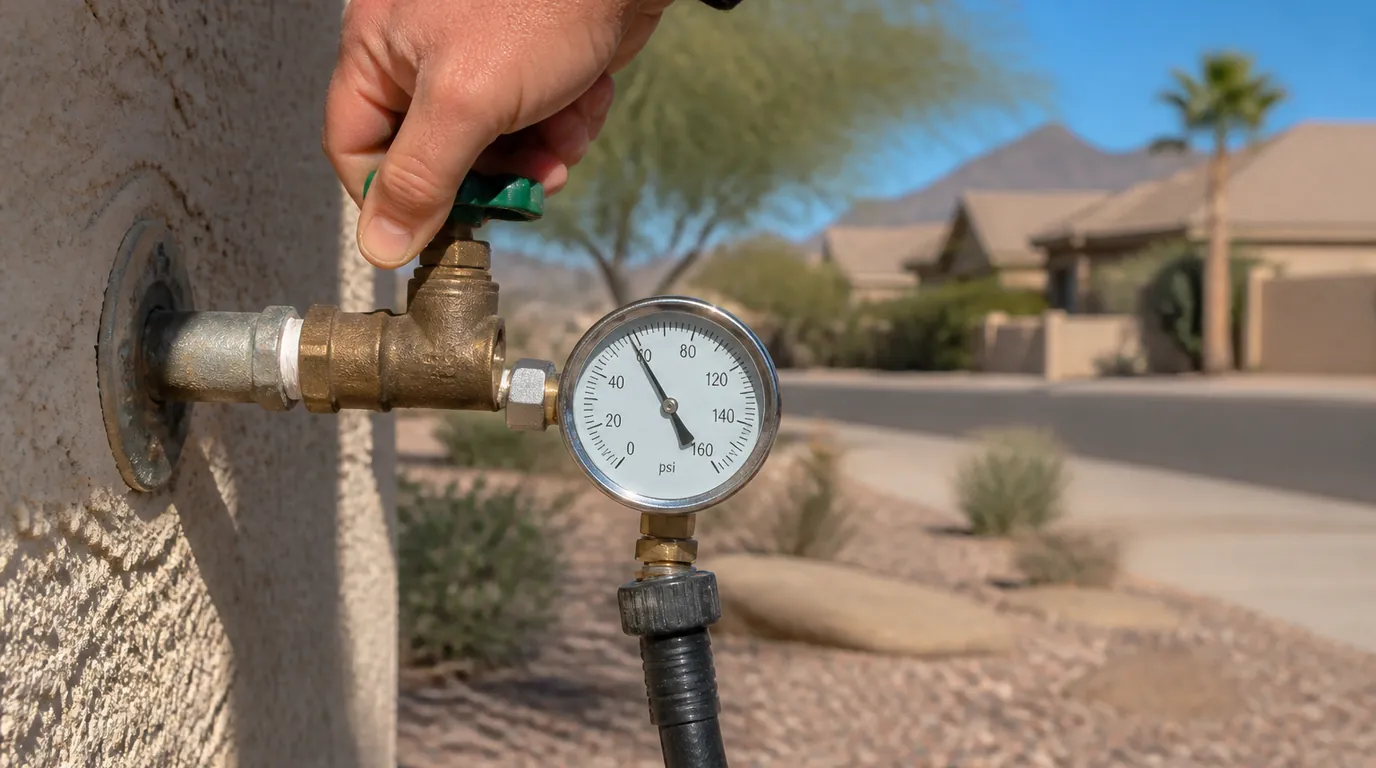
A pressure reducing valve near the main is common, and as it ages it may restrict flow or allow pressure to climb. A plumber attaches a gauge to a hose spigot to see the real number.
Low readings even when the regulator is ruled out point upstream, to the service line, the meter or the city supply. Contacting the water provider can rule out a neighborhood-wide problem.
A pressure problem can be a ten minute fix or a pipe replacement, so the cause drives the number.
Ask for the cause in plain words and what each fix would cost before approving work.
Third-party estimates put Avondale water in the very hard range, about 239 ppm for ZIP 85323. Scale clogging aerators and showerheads is therefore common, and a softener may reduce it.
Ask your water provider for a current water quality report (Avondale publishes one each year) if you want actual hardness numbers for your address.
Hard water leaves mineral deposits that narrow pipes and clog fixtures over the years. Galvanized steel pipe rusts from inside and shrinks the opening, which is a common cause in older homes.
A leak also shows up as low pressure, because water is escaping before it reaches the faucets. A moving meter with everything off points that way. See leak detection for how it is traced.
If the pipe itself is the problem, the options are replacing a section or the whole run. See repiping for how a plumber compares them.
If the water heater is the cause on the hot side, read water heater repair for flushing and valve checks.
Notice when and where the pressure drops, since that points at the cause.
Check whether the problem is one fixture or all of them, and whether hot and cold are both low. Note the time of day.
Clean aerators and showerheads. Confirm the main valve and the meter box valve are fully open. Ask a neighbor whether their pressure has changed.
The plumber threads a gauge onto a spigot and reads static pressure and flow. Readings at the front and back of the house show whether the restriction sits in the line or the fixtures.
The contractor may then test the regulator, the main valve and the hot water side separately. A leak search follows if the numbers suggest water is escaping.
A cartridge or aerator is a repair. A failing regulator is usually replaced as a unit. Corroded galvanized lines are a replacement discussion.
Ask the plumber to show you the clogged part or the pressure reading so you see the cause before you pay.
Pinpoint where hidden water is escaping, whether in a wall, under a floor or along the buried pipe, before any demolition starts.
Repair or replace the underground line that feeds water into the house.
Swap out worn supply piping across the house once patching no longer holds.
A suddenly low flow is often a closed or partly closed valve, a failed regulator, a leak or a problem with the supply. Check whether neighbors are affected.
The water heater, its shutoff or scale in the hot lines may be restricting flow. A flush or a valve replacement can help.
Yes. Mineral scale narrows pipes and clogs fixtures over the years. A softener or periodic cleaning can help.
A gauge threads onto an outdoor spigot. Many plumbers consider roughly 40 to 80 psi a normal range, though a contractor can advise on your home.
It depends on the cause. A fixture cleanout costs less than a regulator replacement, and a pipe replacement costs more. Ask for a quote after the diagnosis.
A plumber normally does this at an outdoor spigot. Ask the contractor what readings they expect and what they recommend if it is out of range.
Many homes have one near the main shutoff. A plumber can check whether yours works and whether it needs adjusting or replacing.
Not by itself, but a sudden drop can mean a leak. If the meter moves with everything off, treat it as urgent and call.
Yes. A sudden drop with no warning can mean a break, so use the 24/7 line and mention if any area of the house still has full pressure.
Check whether the meter moves with everything off, then call. The dispatcher asks where the pressure drops and what you have already tried.
Service area centered on Avondale and nearby Maricopa County cities.